
The Anatomy of a Masterclass: How Germany Dismantled Ecuador in the 2006 World Cup
The 2006 FIFA World Cup, hosted by Germany, remains one of the most romanticized tournaments in modern football history. Dubbed the “Sommermärchen” (Summer Fairytale), it was a tournament where the German national team shed its reputation for rigid, functional play style, embracing instead an expressive, high-octane offensive philosophy. This tactical evolution was put on full display during their Group A finale against an in-form Ecuador side. With both teams having already secured qualification to the knockout stages, the battle was for top spot in the group—and Germany was determined to put on a show for the home crowd in Berlin.

The Lightning Start: Klose’s Spatial Intuition
From the opening whistle, Germany’s tactical intent was clear: stretch the Ecuadorian defensive block and exploit the half-spaces. It took less than four minutes for Jurgen Klinsmann’s side to break the deadlock. The sequence began with Bernd Schneider, whose creative output from the right flank was a constant threat throughout the tournament.
Schneider delivered a perfectly weighted ball into the penalty box, dragging the Ecuadorian center-backs out of position. The ball found Per Mertesacker, who intelligently recycled the play toward Miroslav Klose. Displaying his world-class spatial awareness, Klose anticipated the trajectory of the ball, adjusted his body, and clinically fired it into the far corner. The Munich-bound striker celebrated in his trademark fashion, cartwheeling away as the Olympiastadion erupted.
Deconstructing Ecuador’s Midfield Press
Ecuador had gained a reputation in the tournament for maintaining a compact, disciplined mid-block. However, Germany’s double-pivot in midfield successfully bypassed this pressure. By circulating the ball quickly from side to side, the Germans forced Ecuador’s midfielders to cover excessive lateral ground, creating massive gaps between their midfield and defensive lines.
- Direct Over-the-Top Delivery: Recognizing Ecuador’s high defensive line, the German playmakers began looking for direct aerial channels.
- Targeting the Fullbacks: Germany focused their attacks down the flanks, isolating Ecuador’s fullbacks in 1v1 situations.
- Rapid Transitional Triggers: Every time Ecuador committed men forward, Germany’s defensive unit looked to launch immediate vertical counter-attacks.

Double Trouble: The Second Goal
As the first half drew to a close, Germany struck a devastating psychological blow. A sublime, delicate chip over the top of the Ecuadorian backline sent Miroslav Klose chasing deep into the penalty area. Ecuador’s goalkeeper rushed off his line in an attempt to smother the danger, but Klose’s anticipation was superior.
With a deft touch, Klose bypassed the oncoming keeper, maintaining his balance under pressure. Despite the narrowing angle and recovering defenders, he calmly slotted the ball into the empty net. This second goal not only highlighted Klose’s predatory instincts but also exposed the fundamental vulnerabilities in Ecuador’s offside trap when facing elite diagonal runs.
The Counter-Attack Masterclass: Podolski Seals It
Down 2-0, Ecuador had no choice but to commit more players forward in the second half. This tactical shift played directly into Germany’s hands, setting the stage for a textbook counter-attacking sequence. After winning possession deep in their own territory, the Germans transitioned with blistering speed.

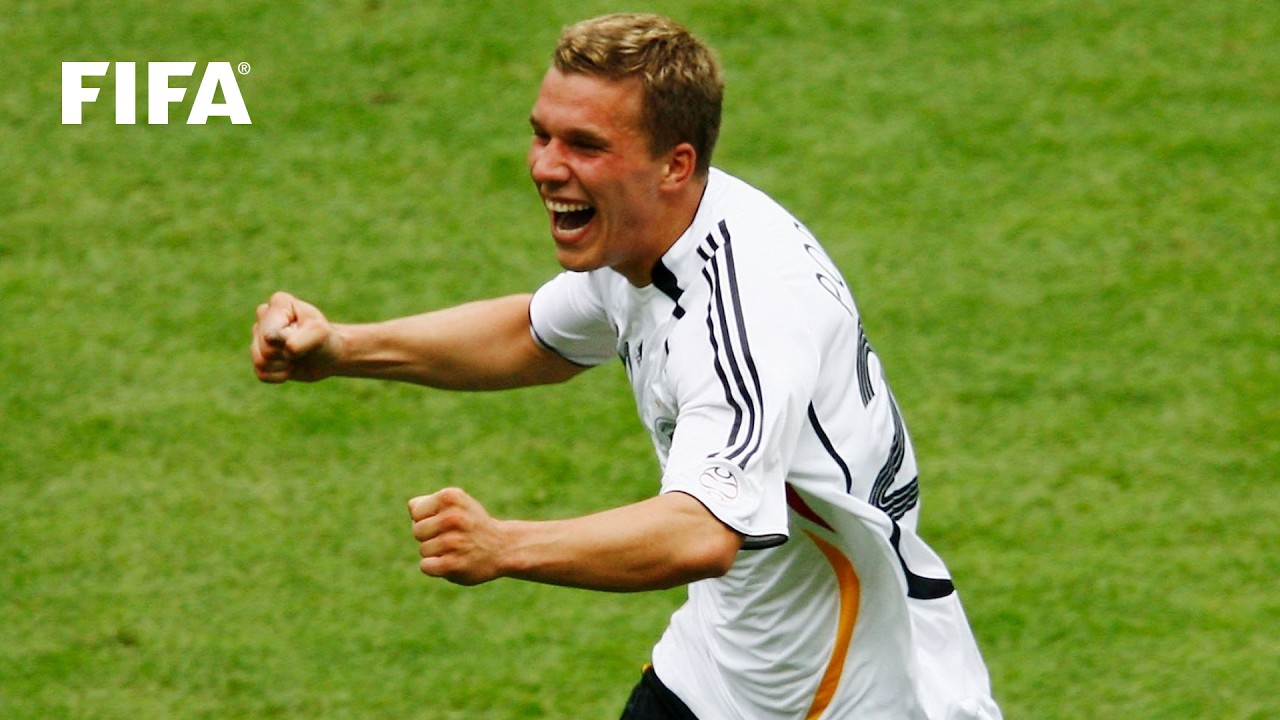
Bernd Schneider led the charge, driving forward into the vacant space on the right wing. Spotting the overlapping run of Lukas Podolski, Schneider delivered a pin-point, low cross across the face of the goal. Podolski, arriving at the back post, slid in to redirect the ball past the helpless keeper to make it 3-0.
The relief on Podolski’s face was palpable. Having struggled to find the back of the net in the opening group matches, this goal served as a massive confidence booster for the young forward. It was a goal made in Cologne and perfected on the world stage, demonstrating the telepathic chemistry between Germany’s golden generation of attackers.
Legacy of the Match
This 3-0 victory was more than just a battle for group supremacy; it was a statement of intent. Germany proved they could dismantle organized defensive structures using a mix of intricate passing and devastating transition play. Miroslav Klose’s brace set him on the path to winning the Golden Boot, while the team’s fluid style of play laid the groundwork for the tactical identity that would eventually lead them to World Cup glory in 2014.