

A Night Etched in Australian Sporting Folklore
On June 22, 2006, inside the Gottlieb-Daimler-Stadion in Stuttgart, German skies set the stage for an all-or-nothing clash that would permanently redefine Australian football. After a 32-year World Cup absence, Guus Hiddink’s Socceroos stood on the precipice of destiny. Heading into the final Group F match, the equation was electrifyingly simple yet fiercely demanding: avoid defeat against a talented Croatian squad, and Australia would qualify for the Round of 16 for the first time ever.

Early Shocks and Ice-Cold Nerves: Srna vs. Moore
The fixture ignited just two minutes after the opening whistle. Croatia won a free kick outside the box, and Darijo Srna stepped up to deliver a curling masterpiece that beat goalkeeper Zeljko Kalac into the top corner. At 1-0 down almost immediately, Australian fans around the globe felt the familiar sinking dread of historical heartbreak.
Yet, this 2006 team—often hailed as Australia’s ‘Golden Generation’—was constructed with unprecedented grit. Refusing to buckle, the green and gold pushed forward relentlessly. The breakthrough arrived late in the first half when Croatian defender Stjepan Tomas committed a blatant handball inside the penalty area. Referee Graham Poll pointed directly to the spot.
- The Moment: Craig Moore, winning his international stripes over an 11-year career, stepped up to shoulder the nation’s hopes.
- The Execution: With absolute composure, Moore dispatched the spot-kick past Stipe Pletikosa to level the score at 1-1, sending Australian pubs and live sites into unbridled delirium.

The Kalac Nightmare and the Unforgiving Stakes
The drama escalated in the second half. Hiddink’s tactical gamble to start the towering Zeljko Kalac in place of Mark Schwarzer took a painful turn in the 56th minute. Croatian captain Niko Kovač struck a hopeful shot from distance that bounced awkwardly, slipping through Kalac’s hands and trickling into the net to make it 2-1 for Croatia.
Time was rapidly slipping away. Defeat meant an agonizing flight home; a single goal meant national immortality. Hiddink unleashed his tactical mastery, throwing caution to the wind by introducing more attacking firepower, including John Aloisi and Marco Bresciano, pinning Croatia back into their own penalty box.
Kewell Strikes: The Goal That Shook Australia
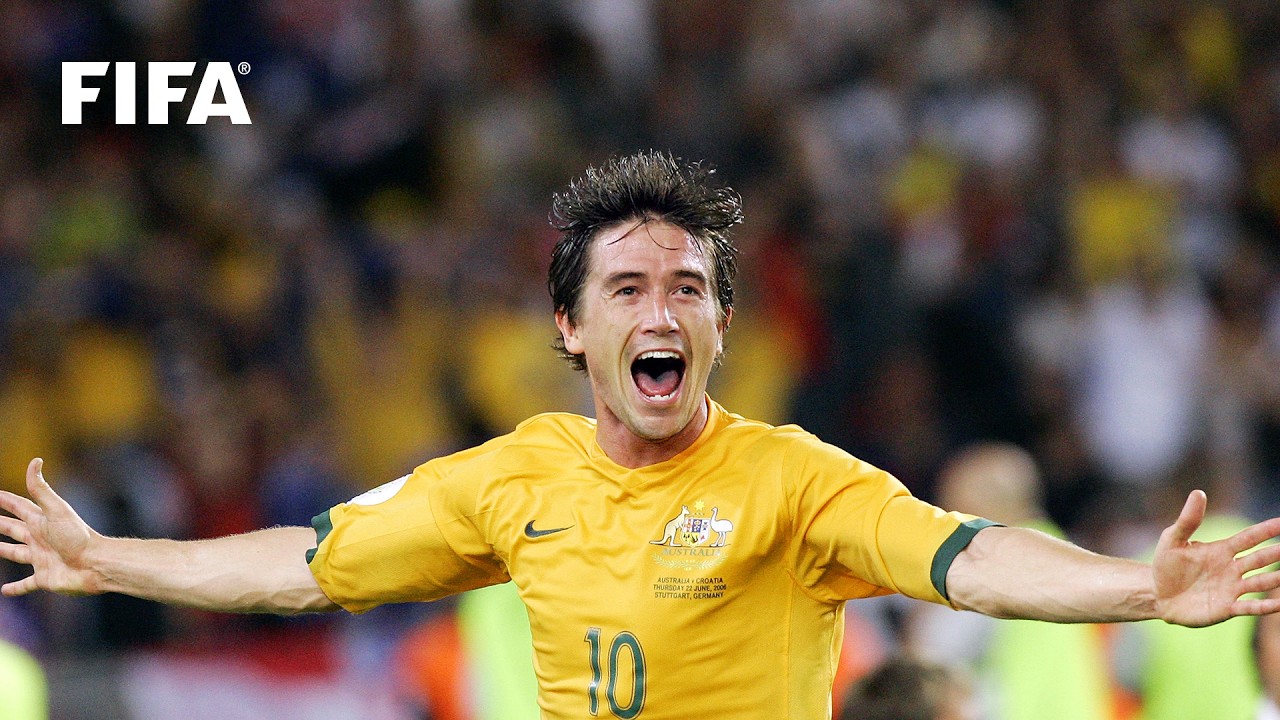
With just eleven minutes remaining in normal time, Australian persistence bore historic fruit. A teasing cross floated into the box, bounced over the Croatian defense, and found Harry Kewell waiting at the far post. Kewell controlled the ball cleanly, composed his footing, and lashed a clinical half-volley into the bottom corner.

The roar that erupted spanned continents, echoing from the packed terraces in Stuttgart to Federation Square in Melbourne and Darling Harbour in Sydney. Kewell’s strike secured the vital 2-2 draw, enduring chaotic final minutes that included multiple red cards and referee Graham Poll famously issuing three yellow cards to Josip Šimunić before sending him off.
The Enduring Legacy of the 2006 Socceroos
When the final whistle blew, the Socceroos had made history. Australia had not only survived the ultimate high-wire act against an elite European nation, but they had also announced themselves on football’s grandest stage. Though their tournament run would end in contentious circumstances against eventual champions Italy, the resilience demonstrated on that June evening in Stuttgart remains the gold standard of Australian sporting spirit.