
The Dramatic Backdrop: Puebla, 1986
The 1986 FIFA World Cup in Mexico remains one of the most culturally iconic and tactically diverse tournaments in football history. While most retro discussions center around Diego Maradona’s heroics, the quarterfinal matchup between Spain and Belgium at the Cuauhtémoc Stadium in Puebla was a masterclass in tension, grit, and tactical evolution. Situated some 80 miles east of Mexico City, Puebla became the battleground for two nations that had defied early skepticism to reach the final eight.

Both squads entered the clash riding waves of momentum. Spain had just demolished a highly-rated Danish side 5-1, spearheaded by the predatory instincts of Emilio Butragueño. Belgium, meanwhile, had emerged victorious from a thrilling 4-3 extra-time epic against the Soviet Union. Yet, injuries and suspensions forced both managers into significant tactical reshuffles. Spain had to rebuild their central defensive partnership due to suspensions and injuries, while Belgium harbored deep concerns over legendary goalkeeper Jean-Marie Pfaff’s injured ankle and key defender Georges Grün’s groin strain.
Tactical Adjustments & Early Exchanges
From the opening whistle, the tactical blueprint of both teams was clear. Spain relied on the creative spark of Míchel and the blistering movement of Butragueño, attempting to stretch a makeshift Belgian backline. Conversely, Belgium operated with disciplined structure, utilizing Franky Vercauteren’s world-class left foot to deliver lethal service from the flanks.
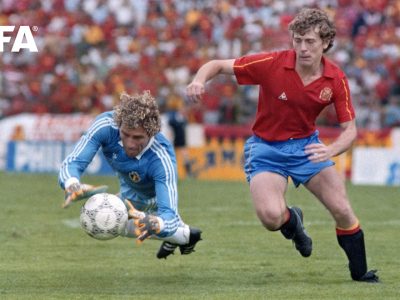
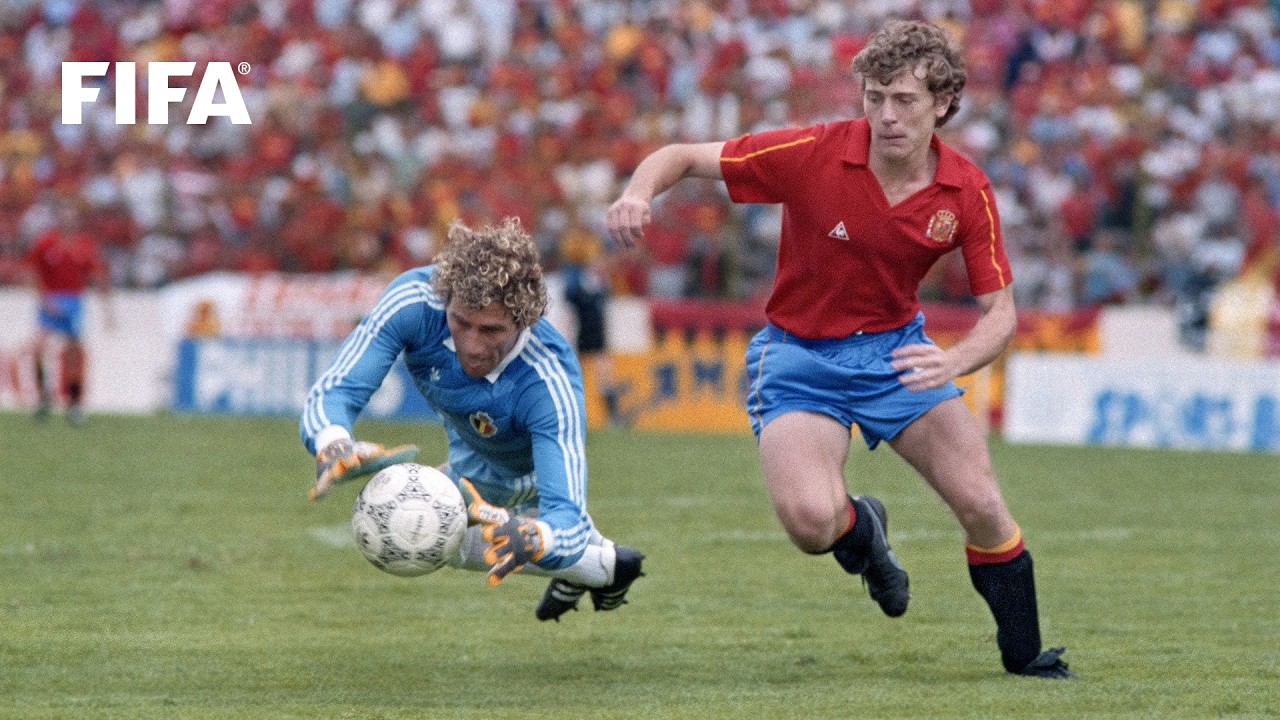
Despite carrying an ankle injury that prevented him from taking goal kicks, Jean-Marie Pfaff marshaled his penalty box with characteristic bravado. Spain dominated early possession, with Victor Muñoz driving into space and drawing heavy fouls. However, Spain’s defensive reorganizations soon showed vulnerability. The lack of cohesion between their stand-in central defenders struggled to handle the physical presence of Belgian captain Jan Ceulemans and the trickery of a young Enzo Scifo.
The Belgian Breakthrough
The breakthrough came in the 35th minute, exposing Spain’s defensive miscommunication. Franky Vercauteren received the ball on the left wing and delivered a pinpoint, bending cross into the heart of the penalty area. Stripped of their regular center-backs, the Spanish defense completely lost track of Jan Ceulemans. The Belgian captain ghosted into the box, directing a powerful header past Andoni Zubizarreta—then the world’s most expensive goalkeeper at £1.2 million—to make it 1-0.

Spain’s Relentless Search for an Equalizer
The second half saw Spain push men forward with desperate urgency. Míchel began dictating play from deep, while Butragueño tirelessly worked the channels. Belgium, however, remained incredibly dangerous on the counter-attack. Daniel Veyt and Jan Ceulemans squandered golden opportunities to double Belgium’s lead, with Zubizarreta making several crucial stops to keep Spain’s World Cup dreams alive.
As the minutes ticked away, Spain threw caution to the wind. The introduction of fresh legs added dynamism to the Spanish attack. Pfaff continued to act as a barrier, pulling off a spectacular, brave save at the feet of Julio Salinas. Just when it seemed Belgium would secure a semi-final berth within normal time, a moment of individual brilliance stunned the stadium.
Señor’s Moment of Magic
In the 85th minute, a loose ball fell to Spanish midfielder Juan Señor outside the penalty area. Known primarily for his right-footed play, Señor unleashed a thunderous, swerving left-footed drive. The ball rocketed through a crowd of defenders, leaving an unsighted Pfaff completely helpless as it nestled into the bottom corner. The Spanish bench erupted; against all odds, they had forced the game into extra time.
The Drama of Extra Time
Extra time was a grueling test of endurance under the taxing Mexican altitude. Both teams, visibly exhausted, relied on pure adrenaline. Spain continued to probe through Míchel and Victor, while Georges Grün made vital defensive blocks for Belgium despite his groin injury.

With less than a minute remaining in extra time, a rapid counter-attack spearheaded by Spain’s fresh substitute Eloy Olaya threatened to snatch a late winner, but the Belgian defense held firm. The referee’s whistle blew, signaling that this epic quarterfinal would be decided by the agony and ecstasy of a penalty shootout.
The Ultimate Test: A Tense Penalty Shootout
The shootout became a psychological battle of wits, dominated by the theatrical antics of Jean-Marie Pfaff. The Belgian shot-stopper danced on his goal line, attempting to break the concentration of the Spanish takers.
- Round 1: Spain’s Señor and Belgium’s Claesen both convert clinical spot-kicks.
- Round 2: Eloy Olaya, Spain’s 21-year-old talent, steps up. Pfaff guesses correctly, diving to his right to save the youngster’s effort. Scifo calmly converts for Belgium, giving them the upper hand.
- Rounds 3 & 4: Chendo and Butragueño convert for Spain, while Broos and Vervoort execute perfect penalties for Belgium, keeping the pressure high.
- Round 5: Victor scores for Spain, meaning Leo Van der Elst has the chance to send Belgium to the semi-finals. He steps up, remains cool, and slots it home.
Conclusion: Belgium’s Historic March
With a 5-4 victory on penalties, Belgium clinched their spot in the World Cup semi-finals for the first time in their history, setting up a legendary encounter with Diego Maradona’s Argentina. For Spain, it was a heartbreaking exit defined by fine margins and defensive absences. For football purists, this match remains a shining example of 1980s tactical resilience, dramatic equalizers, and the unforgettable psychological warfare of tournament football.