
Welcome to the Agent Era: Key Takeaways from Microsoft Build 2026
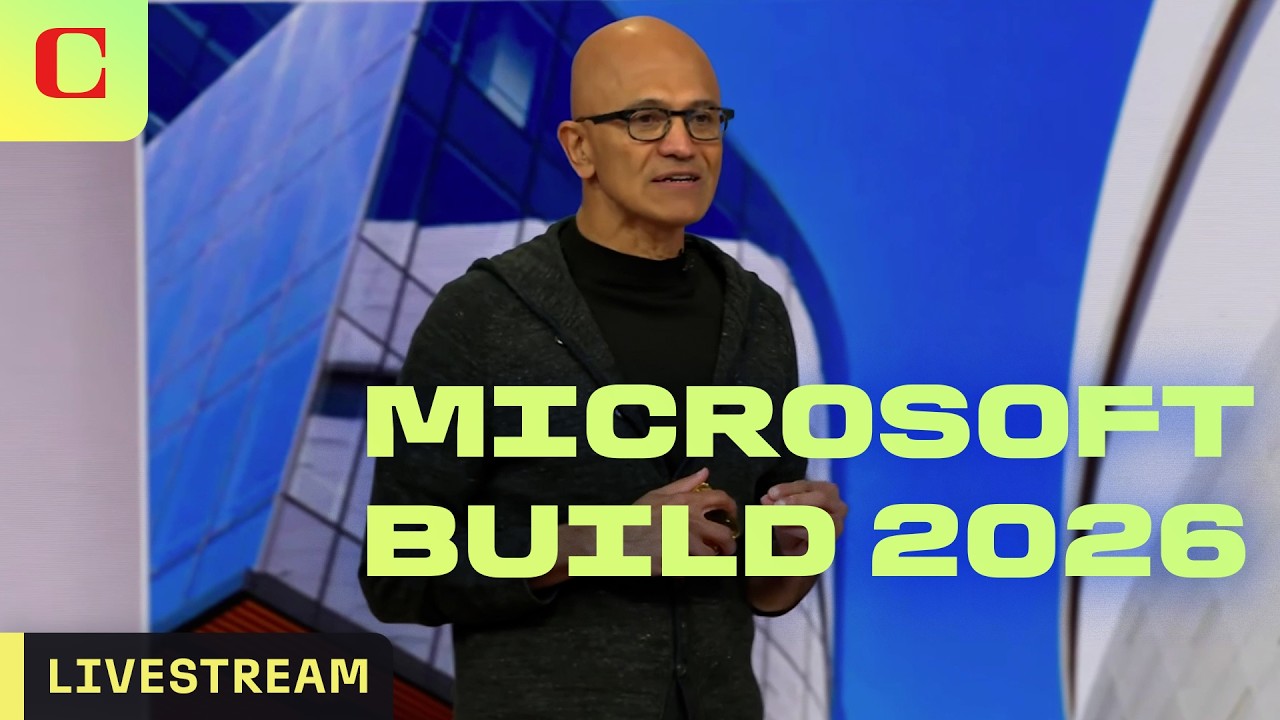
Microsoft Build 2026 will be remembered as the exact moment the technology industry pivoted from building copilots as application extensions to constructing autonomous agentic ecosystems. Delivering the opening keynote in San Francisco, Microsoft CEO Satya Nadella set the tone for a conference dedicated to unpacking a completely redesigned AI stack. This stack spans ubiquitous local compute at the edge, liquid-cooled superfactories in the cloud, highly optimized custom silicon, and the runtime engines needed to govern, secure, and run autonomous agents safely at scale.
Rather than focusing on a single model or platform, Build 2026 laid out a vision for a frontier intelligence ecosystem where developers and enterprises fully control and compound their own intellectual property. Let’s do a technical deep dive into the massive announcements, structural shifts, and system innovations that emerged from the event.
1. Redefining the Edge: Local AI and the Rise of the “Dream” Developer Machine
For the past few years, the narrative around AI has been heavily centralized in hyper-scale cloud environments. Microsoft is systematically dismantling this limitation by expanding the scope of Windows ML and Windows AI to bring unmetered, local, and private intelligence to every desktop.
In-Box System Language Models (SLMs)
To power local agentic workflows without constant roundtrips to the cloud, Windows is introducing two new in-box models designed to run locally on consumer and enterprise hardware:
- ION Instruct: A highly efficient, local Small Language Model (SLM) specialized in complex, on-device reasoning.
- ION Plan: A local agentic loop model capable of managing planning, tool usage, and execution entirely on the host machine.
Silicon Innovation: The Nvidia RTX Spark and Snapdragon X2 Elite
The hardware powering this edge revolution is evolving rapidly. Key ecosystem milestones include Intel’s Panther Lake, AMD’s Ryzen line, and Qualcomm’s Snapdragon X2 Elite (and sub-$500 Snapdragon C). However, the showstopper was the Nvidia RTX Spark, a next-generation System-on-Chip (SOC) for PCs that integrates the CPU, GPU, and AI accelerators with a unified memory architecture and integrated hardware Root of Trust (DRTM).
The first hardware flagship to feature this chip is the Surface Ultra, sporting a gorgeous 2000-nit display, all-day battery life, and an astounding 128 GB of unified memory.
The Surface RTX Spark Dev Box and Desktop Data Centers
For developers, Microsoft announced the Surface RTX Spark Dev Box, a physical “dream machine” featuring:
- 1 Petaflop of local AI compute
- 20 high-performance CPU cores
- 128 GB of unified memory access
Taking edge compute to its absolute extreme, Nvidia CEO Jensen Huang joined Satya Nadella to announce that Windows is coming to the DGX Station (powered by the GB300 system). Dubbed a “desktop data center,” this system allows developers to run a massive 1-trillion-parameter model entirely locally—putting the equivalent power of a cloud supercomputer from a few years ago directly under a developer’s desk.
2. The New Windows Dev Environment: First-Class Linux, WSL Containers, and Copilot Integration
The development experience on Windows has received a massive productivity overhaul. To make Windows the premier place for software development, Microsoft introduced several key enhancements:
- Distraction-Free Dev Environment: A clean, calm UX with no widgets, notification feeds, or pop-ups, running in dark mode by default.
- Vertical Taskbar: Re-introduced in Windows Insider builds due to overwhelming user demand.
- Intelligent Terminal: A new terminal interface featuring built-in, agent-agnostic GitHub Copilot capabilities.
- WSL Containers: A native container experience inside the Windows Subsystem for Linux (WSL) that can directly leverage the host’s physical GPU for accelerated local modeling.
- 75+ Native Unix Utilities: Beloved command-line utilities like
grep,head,tail,m, andtouchare now natively integrated into Windows alongside native support for ZSH, Starship, and Homebrew. - Git-Aware File Explorer: The native file system runs on REFS with asynchronous Defender checks and displays Git branch names, commit messages, and author details directly in the UI.
3. Cloud Infrastructure for the Agent Era: Azure Fairwater, Cobalt 200, and Vera Rubin
In the cloud, Microsoft’s core engineering challenge is optimizing the physical equation of “tokens per dollar per watt.” Satya Nadella revealed that Microsoft has built more data center capacity in the last 18 months than in the entire first decade of Azure, spanning over 500 data centers across 80 regions.
Azure Fairwater: The Liquid-Cooled Superfactory
The primary architectural answer to massive AI workloads is Fairwater, Microsoft’s custom-built AI superfactory spanning regions like Georgia and Wisconsin. Designed in 3D to pack racks as densely as possible, Fairwater features a closed-loop cooling design that consumes effectively zero water. Over the course of an entire year, Fairwater’s daily water usage is equivalent to that of a single local restaurant.
Silicon and Network Co-Design: Maya 200, Cobalt 200, and Vera Rubin
Azure’s hardware strategy focuses heavily on deep optimization through custom silicon:
- Maya 200: Microsoft’s custom AI accelerator is now live in Iowa and Arizona, delivering a 30% improvement in tokens per dollar compared to leading commercial GPUs. It has been validated against GPT 5.5 and will power Microsoft 365 Copilot.
- Cobalt 200: Azure’s next-generation ARM-based CPU delivers a 50%+ performance improvement over Cobalt 100. More importantly, when benchmarked against real-world agentic traces from GitHub Copilot, Cobalt 200 delivers a 33% reduction in latency and a 23% increase in throughput.
- Nvidia Vera Rubin System: Microsoft is the first cloud provider to validate and stand up the Vera Rubin architecture. Designed specifically for massive, multi-tenant agent execution, Vera Rubin features low-latency, end-to-end encrypted computing from storage (long-term memory) to processing (working memory).
4. Project Solara: The New Chip-to-Cloud Platform for Wearables and Ambient Devices
In one of the most unexpected reveals of the keynote, Microsoft introduced Project Solara—a complete, open, and horizontal platform designed specifically for an agent-first world. Solara assumes that the future of compute is not centered around a single device (like a phone), but rather a distributed constellation of specialized devices running custom agents.
Project Solara provides an Android Open Source Project (AOSP)-based device platform with a dynamic, “just-in-time” user interface that automatically adapts to unique form factors. Microsoft previewed two concept devices:
- The Solara Desktop (Stationary): Powered by MediaTek silicon, this ambient office companion uses Windows Hello for Business to log users in securely. It surfaces contextual workloads from Microsoft 365 Copilot grounded in Work IQ, acting as an interactive bridge to Cloud PCs.
- The Solara Access Badge (Portable): Built on Qualcomm’s wearable silicon, this physical badge features biometric fingerprint unlock, built-in cameras, and a microphone array. It allows users to execute tasks on the go—such as a nurse in a hospital completing hands-free voice-based clinical documentation, annotating charts, and verifying patient vitals or medicine barcodes using the integrated camera.
Ecosystem partners like CVS Health, Best Buy, Levi’s, AccuWeather, and Target are already actively exploring Project Solara reference designs to build bespoke physical devices for their operational staff.
5. The Intelligence and Context Layer: Web IQ, Fabric IQ, and Horizon DB
Agents require robust context to be token-efficient. Satya Nadella outlined Microsoft’s unified IQ layer, combining global web indexes, real-time business telemetry, and internal productivity documents:
- Web IQ: A model-agnostic, MCP-native search engine built for LLMs. It lets agents ground responses in fresh, verifiable web content, images, and videos with best-in-class velocity, cost, and accuracy.
- Fabric IQ: Integrates with PowerBI semantic models to build rich operational ontologies. It links live telemetry with physical/digital business models, allowing agents to reason over real-time telemetry (e.g., a live power grid).
- Work IQ: Connects directly to SharePoint, OneDrive, and Teams to keep agents updated on company processes and playbooks dynamically. No prompt rebuilds or PDF re-uploads required.
To support the intense, read-heavy query patterns generated by active agents, Microsoft launched Horizon DB—a fully managed Postgres SQL service on Azure with automated zone-redundant failover, supporting up to 128TB of storage per cluster and 15 read replicas. Horizon DB delivers a massive 3x throughput improvement compared to self-managed Postgres deployments.
6. Agent Runtime and Secure Isolation: MXC and OpenClaw
Because autonomous agents can generate and run code dynamically on host systems, they introduce severe security risks. To solve this, Microsoft introduced Microsoft Execution Containers (MXC)—an operating system-native containment policy layer built directly into Windows.
MXC offers process-level isolation for lightweight tasks, session-level isolation for multiple users, and full VM-level isolation using Windows 365 for Agents.
This runtime security is critical for open-source frameworks like OpenClaw. During the keynote, OpenClaw creator Peter Steinberger announced the establishment of the non-profit OpenClaw Foundation and debuted the Windows Companion App written in WinUI3. In a live demonstration, the MXC-backed container successfully blocked a simulated malicious agent call from deleting files on a developer’s desktop, proving that complex, agentic tools can now run securely in production enterprise environments.
7. Developer Tooling: GitHub Copilot App and the Rayfin SDK
Developer workflows are scaling beyond simple chat prompts. To organize infinite agent sessions, Microsoft launched the GitHub Copilot App. Features include:
- Git Worktrees: Isolated parallel environments that let multiple agent sessions work on different codebase issues simultaneously without conflicts.
- Agent Merge: Continuous automated PR management that handles CI checks, code reviews, and basic merge conflicts.
- Canvas: An interactive UI element enabling agents to construct custom, interactive visual panels on the fly.
To bridge the gap between AI generation and backend logistics, Microsoft introduced Rayfin (Rafen)—an agent-first SDK that connects AI agents to a serverless backend-as-a-service (BaaS). Through a partnership with Replit, developers can write applications inside Replit while deployment, data layers, and identity schemas are automatically provisioned inside the enterprise’s secure Microsoft Fabric tenant.
8. Microsoft AI’s New Family of Frontier Models
Mustafa Suleyman, CEO of Microsoft AI, took the stage to announce a new lineup of seven specialized models developed by the company’s superintelligence lab, designed with clean, commercially licensed data lineage and zero distillation:
| Model Name | Type | Core Capabilities |
|---|---|---|
| MAI Thinking 1 | Reasoning Model | 35B parameters, 256k context window. Achieved 53% on SWE Pro coding benchmark, outperforming many larger models without distilled weights. |
| MAI Code 1 Flash | Coding Model | Ultra-efficient 5B parameter model optimized for VS Code and Copilot CLI. Swept 51% on SWE Pro. |
| MAI Transcribe 1.5 | Transcription | State-of-the-art accuracy across 43 languages; operates 5x faster than rival models. |
| MAI Voice 2 & Flash | Speech Generation | Fine-grained emotional delivery in 15 languages, optimized for ultra-low latency interactive voice agents. |
| M Image 2.5 & Flash | Image Editing | High-fidelity, professional-grade image editing and generation, integrated natively into PowerPoint and OneDrive. |
Suleyman also showcased Frontier Tuning—a method utilizing Reinforcement Learning Environments (RLEs) to train company-specific agents. Using Microsoft’s RLEs, agricultural giant Land O’Lakes successfully trained custom agents to perform complex logistical “butter reporting” operations with over 90% accuracy, while reducing API costs by 10x compared to out-of-the-box foundation models.
9. Sci-Tech Breakthroughs: Microsoft Discovery and Majorana 2 Quantum Qubits
Finally, Satya Nadella closed the keynote by exploring how Microsoft is pushing the scientific frontier, announcing the General Availability of Microsoft Discovery. This parallelized, agentic scientific platform unifies knowledge graphs, molecular simulations, and physical laboratory robotics. To prove its viability, Microsoft demonstrated how Discovery synthesized and simulated 80 new protein candidates to degrade PET plastics, automatically generating the DNA sequences and submitting the instructions to an automated wet lab managed by Cambridge Consultants.
On the quantum computing front, Microsoft announced Majorana 2—the next step in their topological quantum stack. These new physical qubits achieve a mean coherence lifetime of 20 seconds to a minute (a 1,000x improvement over Majorana 1) while executing operations in just 1 microsecond. Due to their ultra-compact form factor, Microsoft plans to fit up to 1 million qubits on a chip smaller than a credit card.
Conclusion: Build for the Agentic Frontier
Microsoft Build 2026 proved that the agent-first paradigm is no longer a distant vision. By providing developers with local “dream machines” like the Surface RTX Spark Dev Box, OS-native containment (MXC), a unified context layer (Microsoft IQ), and custom silicon (Maya 200 and Cobalt 200), Microsoft has delivered the complete blueprint for the next decade of computer science. The question is no longer whether we can build capable agents—it’s how fast we can scale them to solve our most complex physical and digital challenges.