
The David vs. Goliath Clash in Gijón
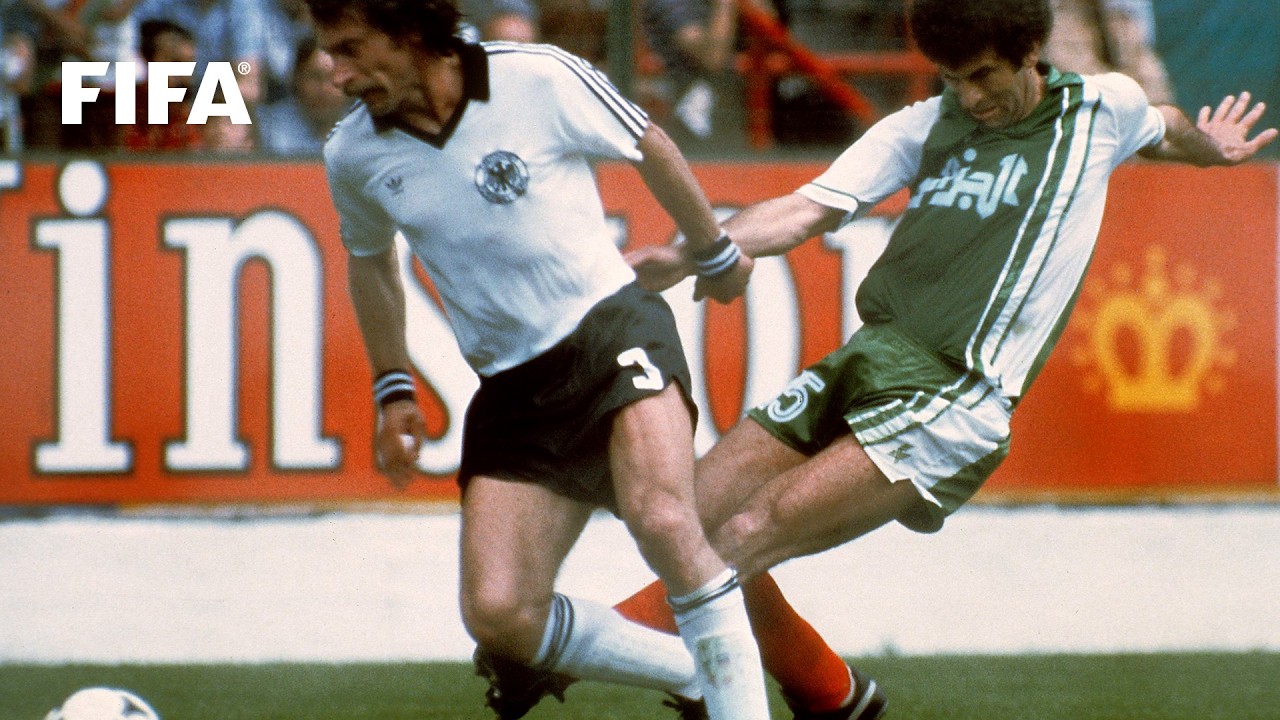
On June 16, 1982, the Estadio El Molinón in Gijón, Spain, set the stage for what many anticipated to be a routine opening Group B fixture at the 1982 FIFA World Cup. On one side stood West Germany, the reigning 1980 UEFA European Champions and one of the undisputed tournament favorites, boasting international superstars like Karl-Heinz Rummenigge, Paul Breitner, Pierre Littbarski, and Horst Hrubesch. On the other side stood Algeria, an unheralded squad making their very first appearance on football’s grandest stage.

While the German squad was expected to cruise past the debutants, the Algerian side—largely composed of domestic league talents alongside key European-based stars like Mustapha Dahleb and Noureddine Kourichi—entered the pitch with technical flair, tactical discipline, and zero intimidation.
First-Half Resilience: Weathering the German Storm
As expected, West Germany pushed forward aggressively from the opening whistle. Early incursions by 22-year-old winger Pierre Littbarski and towering forward Horst Hrubesch tested Algeria’s defensive composure. However, goalkeeper Mehdi Cerbah proved to be an impenetrable wall during the opening forty-five minutes.
- Defensive Solidity: Center-back Noureddine Kourichi and captain Ali Fergani organized a resolute backline that continually frustrated German build-up play.
- Missed Opportunities: West Germany generated numerous set-piece deliveries and corner kicks, yet clear-cut chances were repeatedly squandered by Hrubesch and Rummenigge.
- Tactical Poise: Rather than simply clearing balls aimlessly, Algeria played out from the back with patient passing, waiting for the right moment to counter.
By the time Peruvian referee Enrique Labo Revoredo blew the halftime whistle, Algeria had held the European heavyweights to a 0-0 stalemate, quietly building the confidence needed to launch an all-out offensive in the second half.
The Breakthrough: Rabah Madjer Strikes First
Shortly after the restart, Algeria stunned the world. In the 54th minute, a slick passing sequence unlocked the German defense. Lakhdar Belloumi surged through midfield and unleashed a stinging shot that German keeper Harald Schumacher could only parry into the danger zone. Lurking opportunistically, Rabah Madjer pounced on the rebound to tuck the ball into the net, giving Algeria an unexpected 1-0 lead.

The goal completely altered the dynamic of the encounter. Rather than sitting back to defend their slender lead, the Fennec Foxes pressed their advantage with crisp one-touch passing and fearless wing play from Salah Assad, exposing the aging legs of West Germany’s defense.
Drama in 60 Seconds: Rummenigge’s Reply and Belloumi’s Masterclass
West Germany responded with the urgency expected of champions. In the 67th minute, Felix Magath orchestrated space down the left flank and whipped in a low cross that Karl-Heinz Rummenigge stabbed home to make it 1-1. For many observers, it seemed the status quo had finally been restored.
Yet, within barely a minute of the restart, Algeria produced an instantaneous masterpiece. Straight from kickoff, Algeria carved through the German flank with breathtaking fluidity. Assad dashed to the byline and sent an exquisite low cross into the box, where Lakhdar Belloumi arrived perfectly to tap the ball past Schumacher. In the span of sixty seconds, Germany had leveled the match only to find themselves trailing 2-1.
Desperation, Disallowed Goals, and the Final Whistle
Trailing in the final quarter of the match, Jupp Derwall’s German side threw everything forward in desperation. Long balls were continually pumped into the penalty area targeting Hrubesch and Littbarski, while sweeping efforts struck the woodwork or were smothered by Cerbah’s athletic goalkeeping.

A late disallowed goal for a foul by Hans-Peter Briegel sealed West Germany’s fate. Despite agonizing stoppage-time pressure, Algeria stood firm until the final whistle, cementing a 2-1 triumph that echoed across the globe as one of the most seismic upsets in FIFA World Cup history.
Legacy of the 1982 Upset
Algeria’s triumph over West Germany fundamentally altered the global perception of African football, proving that tactical discipline and individual artistry could overcome traditional European giants. While the tournament would later be marred by the controversial “Disgrace of Gijón” between West Germany and Austria, Algeria’s performance on that sunny afternoon in 1982 remains an immortal masterclass in World Cup folklore.