
The Chessboard of Deschamps: Tactical Blueprint for France vs. Spain
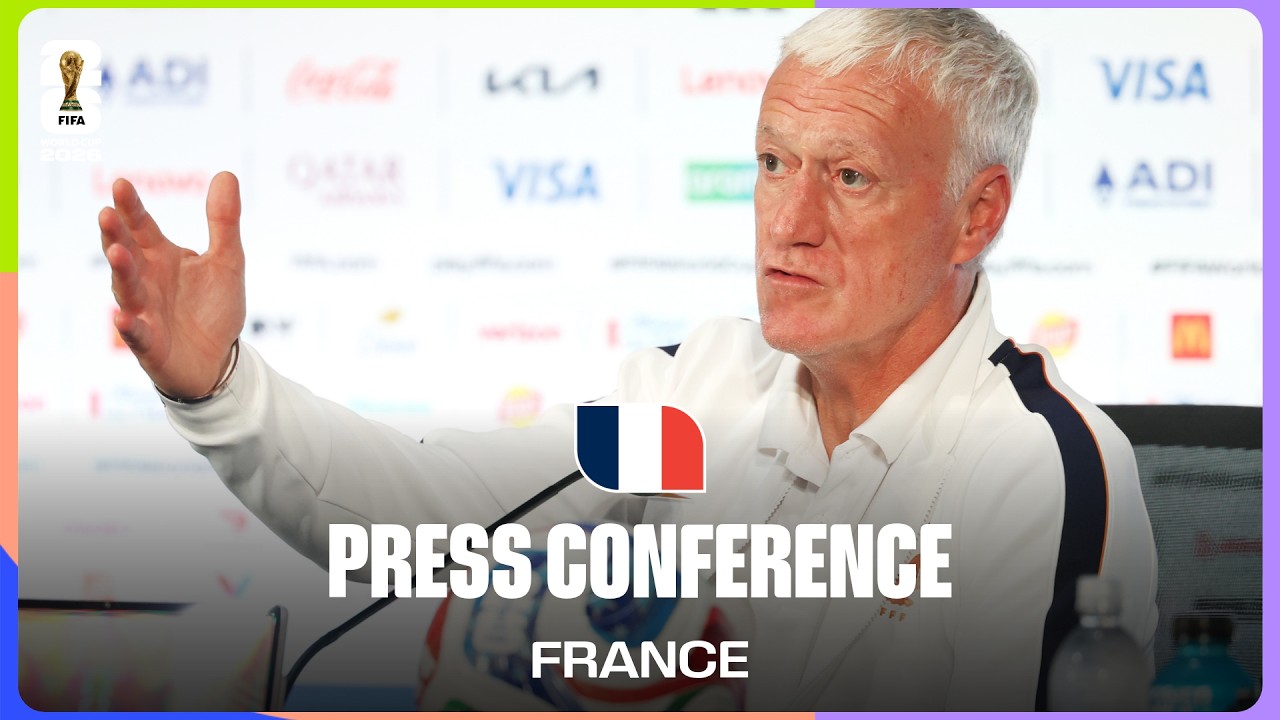
Modern international football is as much a game of micro-level sports science and logistical optimization as it is about on-field magic. Ahead of their monumental semi-final clash against tournament favorites Spain, French national team manager Didier Deschamps addressed the media, laying bare the tactical calculus, physical diagnostic metrics, and psychological framing required to overcome an elite Spanish side. From managing travel-induced fatigue across North America to fine-tuning individual player profiles, Deschamps’ press conference revealed a masterclass in modern sports management.

The Dilemma of Choice: Tactical Profiling of Doué vs. Barcola
Deschamps famously noted that “choosing is renouncing” when it comes to elite squad selection. With emerging talents like Bradley Barcola and Désiré Doué vying for starting spots, the decision is not merely about who is ‘better,’ but which player’s spatial and mechanical profile matches the tactical requirements of the opposition’s defensive block.
Deschamps highlighted the stark differences in how these two young wingers operate:
- Désiré Doué (The Interior Operator): Characterized by his high mechanical flexibility, Doué excels at cutting inside on his left foot, overloading the half-spaces, and disrupting internal defensive lines. This profile is highly effective against modern full-backs who struggle to defend against inward diagonal runs.
- Bradley Barcola (The Touchline Winger): Barcola offers a more traditional, expansive attacking outlet. By hugging the touchline and utilizing explosive linear speed, he stretches the opponent’s defensive horizontal compactness, opening up channels for overlapping midfielders.
Rather than viewing this as a selection headache, Deschamps treats this structural variance as an in-game asset. In a high-tempo match against Spain, having distinct tactical gears allows France to shift their attacking geometry dynamically depending on the game state.
The Tchouaméni Equation: Risk Mitigation and Physical Loading
One of the biggest talking points surrounding the French squad has been the fitness of midfield anchor Aurélien Tchouaméni. Having missed key match minutes, the medical staff’s data-driven approach to his return has been highly calculated.

Deschamps confirmed that while Tchouaméni is not yet performing at a verified 100% match-fitness baseline after a 15-day competitive layoff, he is officially cleared and available. The coaching staff previously held him back because the risk profile was deemed mathematically too high for previous matches. In elite tournament setups, utilizing predictive GPS and muscle fatigue analytics helps prevent re-injury, ensuring that when a pivotal player like Tchouaméni returns, they can withstand the rigorous transition demands of a semi-final.
Neutralizing Spain’s Possession Machine
Spain enters the semi-final boasting an incredible defensive record, having conceded only one goal throughout the campaign. Deschamps openly conceded Spain’s status as favorites, citing their complete defensive cohesion paired with an aggressive, possession-oriented press.
The primary tactical threat highlighted was Spain’s young sensation, Lamine Yamal. To counter his highly creative 1v1 threat, France’s defensive scheme relies on rapid spatial compaction and double-teaming profiles. Deschamps emphasized that while limiting Yamal’s influence is a priority, France’s own attacking threats—including a fully fit Kylian Mbappé—will force Spain to compromise their high defensive line. “It won’t be a walk in the park for their defenders either,” Deschamps warned, setting the stage for an intense tactical duel between Spain’s possession-heavy approach and France’s rapid vertical transitions.

Logistical Analytics: Travel Fatigue and Recovery Protocols
In a tournament spread across the vast geography of the United States, logistics emerge as a hidden performance metric. France’s campaign involved establishing a high-end base camp in Boston before traveling down to Dallas for the semi-final.
Deschamps dismissed concerns about travel distances, emphasizing the role of elite recovery infrastructure. While Spain may have had different travel patterns and recovery durations, Deschamps’ focus remains entirely on optimizing their internal recovery cycles. High temperatures and intense physical loading leave significant physiological footprints; therefore, managing sleep cycles, hydration protocols, and psychological decompression is what truly decides readiness on match day.
The Symbolic 14th of July
Adding a poetic layer to this sporting battle, France will play on the 14th of July—Bastille Day. While Deschamps acknowledges the cultural significance and national pride tied to this date, he remains a pragmatist. For the squad, the primary motivator remains elite competitiveness. The goal is not just to celebrate the national holiday, but to execute their tactical plans flawlessly, secure a spot in the final, and deliver a historic victory for millions of fans watching worldwide.