
The Salvador Stalemate: When Woodwork and Heroics Collided
On July 5, 2014, inside the Arena Fonte Nova in Salvador, Brazil, football fans witnessed an agonizing, heart-stopping FIFA World Cup quarter-final showdown. The high-flying Netherlands, fresh off dismantling defending champions Spain and navigating a dramatic comeback against Mexico, collided with the tournament’s ultimate fairytale side: Jorge Luis Pinto’s disciplined Costa Rica.
For 120 minutes, the Dutch launched an unrelenting offensive siege. Led by Robin van Persie, Arjen Robben, and Wesley Sneijder, the Oranje peppered the Costa Rican penalty box with fierce strikes. Yet, between sensational reflex punches from heroic goalkeeper Keylor Navas and cruel deflections off the crossbar and woodwork, the ball simply refused to cross the line. Tension surged to an unbearable crescendo in extra time when Costa Rica’s Marco Ureña broke through on a sudden counter-attack, forcing a crucial save from Jasper Cillessen to keep the Dutch alive.

The 120th-Minute Gamble: Louis van Gaal’s Audacious Masterstroke
As the match ticked into the final seconds of extra time, the stadium braced for the inevitable drama of penalty kicks. Conventional football wisdom dictated using the final substitution to bring on a reliable penalty taker or shore up exhausted defenders. Instead, Dutch tactician Louis van Gaal orchestrated a move that sent shockwaves through the stadium and the global television audience: he signaled a change between the posts.
Jasper Cillessen, who had produced a clean sheet over two grueling hours, was hauled off. Walking onto the pitch was Newcastle United’s towering shot-stopper Tim Krul. Goalkeeper substitutions are universally regarded as high-risk, desperate, or outright unhinged when executed solely for penalty shootouts. At this elite stage of international competition, failing would have invited merciless public ridicule.
- The Physical Advantage: Standing at 6 feet 4 inches (1.93 m), Krul brought superior wingspan and reach across the goal line.
- The Psychological Edge: Krul had spent days privately studying the penalty habits of Costa Rican kickers alongside goalkeeper coach Frans Hoek, without Cillessen even knowing the plan.
- The Element of Surprise: Introducing a fresh, towering goalkeeper instantly sowed seeds of doubt into the minds of physically exhausted Costa Rican penalty takers.

Mind Games and Defiance: The Shootout Unfolds
When the shootout commenced, Krul transformed the goalmouth into a psychological battleground. Before every single kick, he paced along the line, stared down each Costa Rican shooter, yelled words of intimidation, and pointed toward the corner he intended to dive. It was calculated gamesmanship designed to break their concentration.
The tactical plan yielded immediate results. Remarkably, Krul guessed the correct direction on all five Costa Rican penalties. He produced a spectacular diving stop to deny Costa Rican captain Bryan Ruiz, immediately handing the Netherlands an upper hand. Meanwhile, Dutch superstars Robin van Persie, Arjen Robben, and Wesley Sneijder buried their spot-kicks with clinical ruthlessness, sending Keylor Navas the wrong way with emphatic finishes.

Sealing the Win: Michael Umaña vs. Tim Krul
With the Netherlands leading 4-3, Costa Rican defender Michael Umaña stepped up for the decisive fifth kick. The stakes were absolute: score to keep the dream alive, or miss and send the Dutch into the semi-finals. Krul bounced menacingly on his line, leaped to his left, and firmly palmed Umaña’s driven strike away.
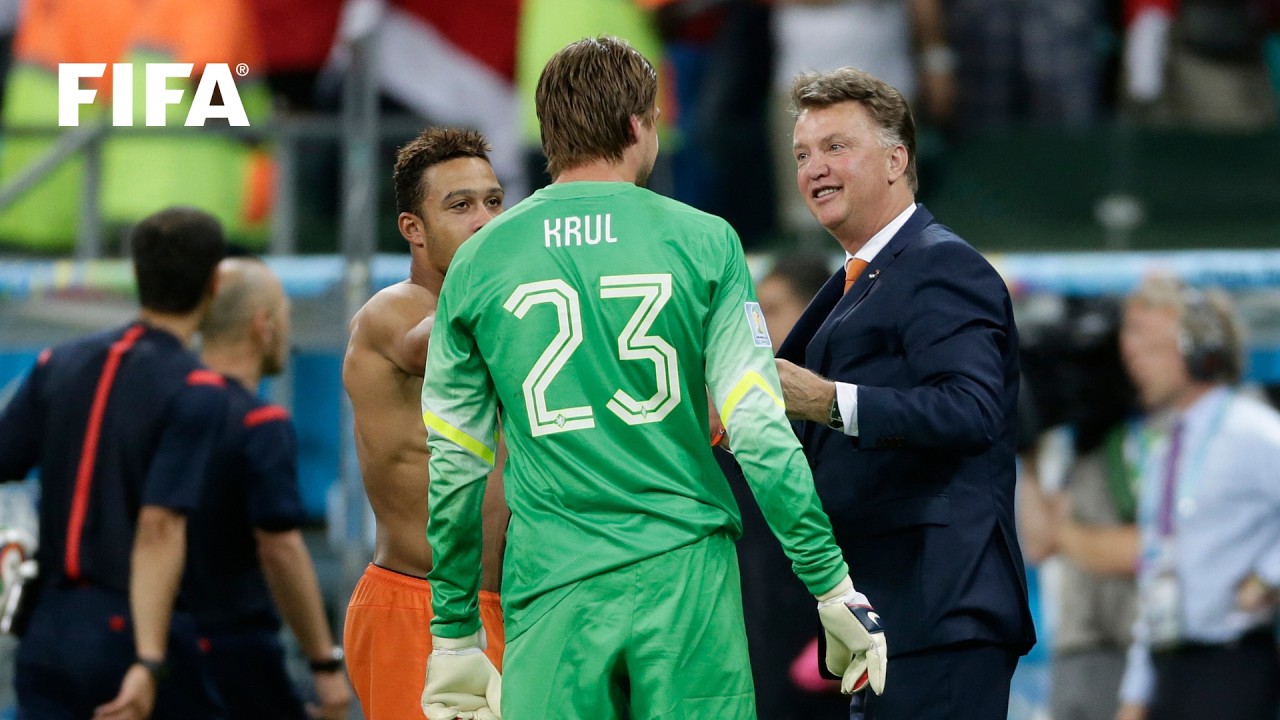
Pandemonium erupted on the pitch. The substitute keeper who had spent the entire tournament on the bench became an overnight national hero in the span of fifteen minutes. Cillessen ran from the dugout to embrace Krul, validating the collective selflessness and brilliance of Van Gaal’s blueprint.
The Legacy of Football’s Greatest Tactical Substitution
History has celebrated countless iconic World Cup moments, but few match the calculated audacity of Louis van Gaal’s maneuver in Salvador. By treating penalty shootouts not as a mere lottery, but as a solvable tactical equation, the Netherlands set a blueprint that top-tier clubs and national squads still attempt to replicate today.
Tim Krul’s performance was more than just good fortune; it was the ultimate fusion of scouting, psychological warfare, and nerves of steel under immense global scrutiny. Over a decade later, the debate remains closed: Van Gaal’s substitution of Krul stands uncontested as the greatest goalkeeper gamble in FIFA World Cup history.