

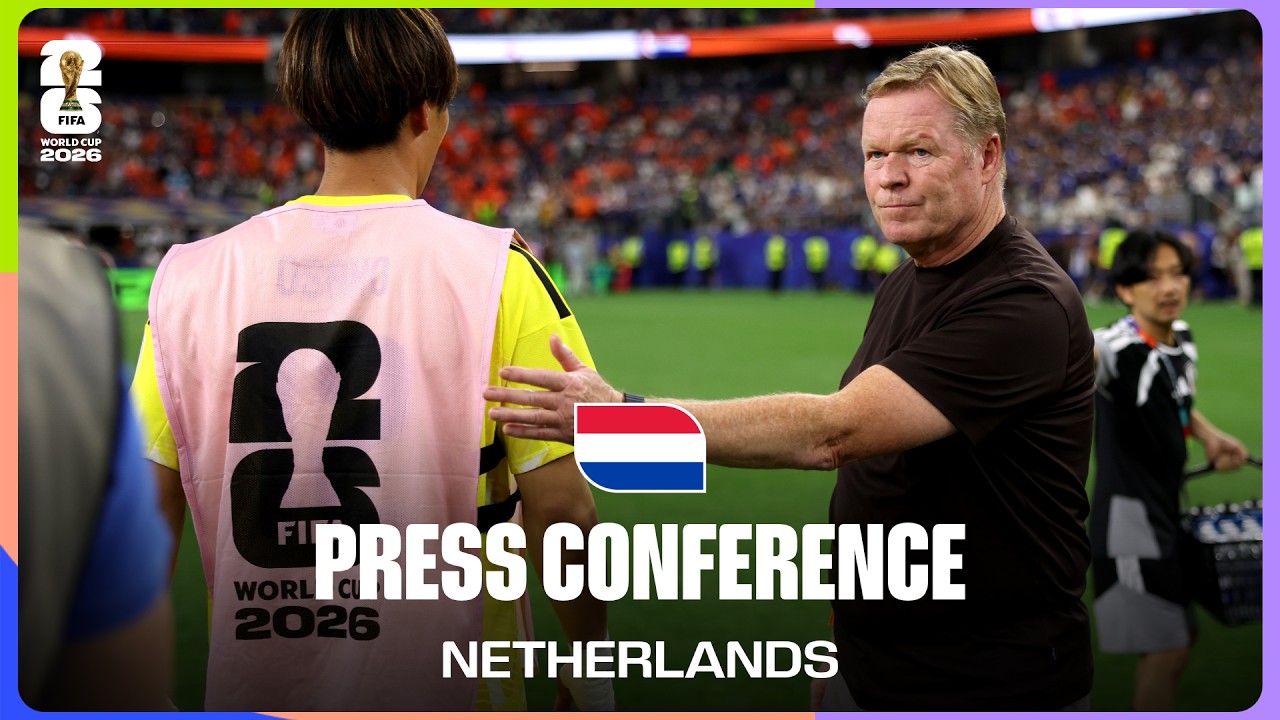
Tactical Breakdown: Decoding Ronald Koeman’s 2-2 Dutch System Against Japan
International football is increasingly becoming a game of chess played at hyper-speed. Following the Netherlands’ recent 2-2 draw against a highly disciplined Japanese side, national manager Ronald Koeman found himself at the center of a tactical storm. Media pundits and fans alike immediately questioned his mid-game adjustments, his defensive structure, and whether his side lost momentum due to crucial second-half substitutions. This article breaks down the technical nuances of Koeman’s press conference, exposing the strategic decisions behind the result.

The Substitution Debate: Momentum vs. Managed Loads
One of the primary talking points of the press conference was Koeman’s decision to utilize the second-half drink break to execute a triple substitution. Critics argued that pulling off high-velocity, direct runners diminished the team’s ability to exploit the vast spaces Japan left open as they chased the game. Koeman, however, firmly rejected this narrative.
According to Koeman, the shift in momentum was not a direct consequence of the substitutions themselves, but rather a natural reaction from the opponent. “That happened the moment we took the lead, even at 1-0,” Koeman explained. When trailing, Japan abandoned their conservative mid-block and pressed higher up the pitch, forcing the Dutch team into transitional defensive phases they struggled to manage. The introduction of Memphis Depay was intended to provide a technical focal point—a “ball-secure” outlet capable of retaining possession under pressure and allowing the midfield block to advance. While the execution fell short due to technical errors on the left flank, the structural logic behind the change remains sound.
Breaking Down Japan’s Low Block: The Wingback Dilemma
Unlocking a well-drilled five-man defensive line requires extreme tactical patience and precise width. Koeman’s blueprint for the match involved deploying Cody Gakpo and Crysencio Summerville wide on the flanks. The goal was simple: pin Japan’s wingbacks deep to prevent them from transitioning into a dangerous counter-attacking five-man midfield.

While Gakpo faced constant double-teams on the left side, the system did generate high-value areas during isolated phases. To optimize this setup in future matches, Koeman highlighted several key tactical adjustments:
- Dynamic Overlaps: Left-back Mickey van de Ven needed to position himself higher up the pitch to exploit the half-spaces when Gakpo pulled defenders wide.
- Rapid Ball Circulation: Shifting the point of attack quicker to force 1v1 situations before the defensive block can slide over.
- Midfield Rotation: Better synchronization between Frenkie de Jong and the advancing advanced midfielders to prevent central congestion.
Defensive Flaws: Lack of Urgency and Tactical Structural Gaps
Despite boasting some of the world’s most coveted central defenders, the Dutch national team conceded two goals that deeply frustrated their manager. Koeman divided these defensive lapses into two distinct categories: structural failures and sheer bad luck.
The first goal conceded was a textbook example of a lack of defensive urgency. Japan managed to isolate a player at the edge of the 16-yard box without facing an immediate, aggressive block. Koeman lamented the lack of proactive closing down, emphasizing that at the elite level, leaving space at the edge of the area is a statistical death sentence. The second goal, by contrast, was deemed highly unfortunate—arising from a chaotic sequence inside the box and a lucky deflection. However, Koeman acknowledged that better set-piece organization and cleaner zonal line management during the second phase of corners could have neutralized the threat entirely.

The Media Stand-off: Pragmatic Progress vs. Traditional “Dutch Philosophy”
Perhaps the most compelling aspect of the press conference was the cultural clash between the Dutch press and Koeman. Journalists questioned if a 2-2 draw against an Asian powerhouse should feel like a defeat, invoking the historical weight of “Total Football” and the expectation that the Netherlands should dominate every opponent.
Koeman fiercely defended his modern, pragmatic outlook. He argued that the media consistently underestimates the technical and physical evolution of global football, particularly the quality of the Japanese squad. “I see a team that has made major strides compared to our previous friendlies,” Koeman stated. Rather than chasing romanticized ideals of complete positional dominance, Koeman is focusing on building a robust tournament team capable of managing different phases of play. In his eyes, this draw is not a step backward, but a critical diagnostic tool to prepare the squad for the harsh realities of tournament knockout football.
Conclusion: A Foundation to Build On
While a 2-2 draw on paper may look like a missed opportunity, the underlying tactical data shows a Dutch side actively experimenting with structural variations. By testing wingback containment, integration of returning stars like Memphis, and high-pressure response systems, Koeman is gathering the necessary intelligence to fine-tune his machine. As the tournament approaches, expect the Oranje to sharpen their defensive triggers and refine their possession metrics to convert these high-pressure draws into convincing victories.