
The Philosophy of Preparation: Why Montevideo Mattered
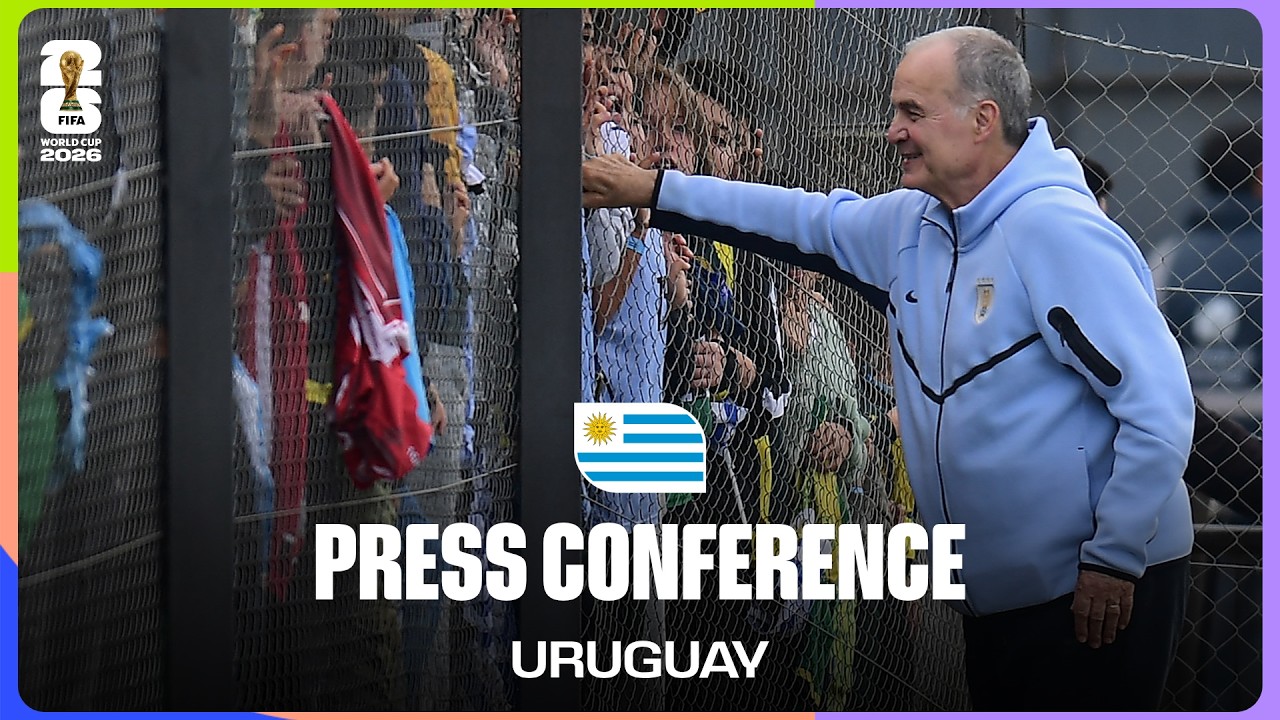
When Marcelo Bielsa speaks, the football world stops to listen. Not because he offers easy headlines, but because he dissects the game with a level of mechanical precision and radical honesty rarely seen in modern sports. Ahead of Uruguay’s highly anticipated tournament debut against Saudi Arabia, “El Loco” took the stage to address everything from logistics and physical preparation to the microscopic details of tactical execution.

Bielsa began by clarifying the logistical choices behind Uruguay’s preparation cycle. Rejecting any excuses regarding a minor flight delay from Playa del Carmen to Fort Lauderdale, he focused on why the squad spent its initial two weeks training in Montevideo rather than abroad. In an era where elite players face grueling schedules—spanning the regular season, the Club World Cup, and immediate international duty—Bielsa prioritized psychological well-being alongside tactical drilling.
- Balancing Load: Players transitioned directly from taxing domestic campaigns into high-pressure preparation windows.
- Family Integration: Training in Montevideo allowed players to balance demanding double sessions with crucial family time, which Bielsa deemed essential for emotional recovery.
- Phased Progression: Two weeks of home-soil training followed by a final, highly focused week in Playa del Carmen, Mexico, designed to acclimatize the squad.
The Modern Dilemma of Sports Science and Injuries
One of the most compelling segments of the press conference revolved around the fitness status of key players, specifically José María Giménez, Giorgian de Arrascaeta, and Ronald Araújo. While Giménez successfully recovered from an ankle injury under the supervision of trusted specialists, both de Arrascaeta and Araújo suffered muscular tears (desgarros) during the preparation phase.

In typical Bielsa fashion, there was no deflecting of blame. Instead, he delivered a masterclass in coaching accountability and sports science integration. He explained that every training load and recovery session was meticulously planned and consensuated with the players themselves, alongside external medical representatives from their respective club teams (including Flamengo and Barcelona). Yet, Bielsa stated a hard truth of high-performance training:
“If a player suffers a muscular tear during recovery and preparation, it must necessarily be interpreted as an error on the part of those who manage the loads. We took every single precaution, yet we must own the responsibility.”
This level of self-criticism highlights the razor-thin margin between pushing elite athletes to their physical peaks and overloading their systems—a challenge that modern sports science continues to grapple with daily.
The Evolution of “El Loco”: From 2002 to 2026
At 70 years of age, Bielsa is embarking on another major international tournament, drawing inevitable comparisons to his previous campaigns with Argentina in Korea-Japan 2002 (at age 46) and Chile in South Africa 2010 (at age 54). When asked how he reflects on this personal journey, Bielsa warned against simplistic comparisons. The game of 2002, he noted, belongs to a completely different tactical and physical epoch compared to the relentless speed of 2026.
Bielsa also shared warm memories of his tenure with Chile, praising the “rich generation of players” that went on to achieve historic success. He also lauded Spain’s structural model of youth development, highlighting their clear tactical identity, aesthetic beauty, and an abundance of talent that guarantees their competitive future for the next 15 years. This global view of football’s evolution informs his current project with Uruguay, where superstars like Federico Valverde instantly elevate the team’s tactical ceiling through their versatile skill sets.
Decrypting Bielsa’s 4-3-3: The Tactical Blueprint
When pressed on his tactical setup for the opening match against Saudi Arabia, Bielsa was characteristically transparent about his structural framework while keeping his starting eleven close to his chest. There are no secrets in Bielsa’s system; the magic lies in the execution.

The Positional Framework
Uruguay will deploy a structured yet highly fluid 4-3-3 system, consisting of:
- The Defensive Line: Two central defenders and two overlapping fullbacks tasked with initiating build-up play.
- The Midfield Engine: A defensive holding midfielder (contención), an advanced playmaker (volante ofensivo), and a box-to-box intermediate midfielder (volante intermedio) to connect defense and attack.
- The Attacking Trident: Two high-intensity wingers to stretch the pitch and a central focal striker.
Key Tactical Objectives
Bielsa’s game model relies on several core pillars to establish dominance. First, the team must construct clean progress from the back, utilizing short passing sequences to bypass initial opponent pressing lines. Once they advance, the objective is to suffocate the opposition by sustaining possession deep within the rival half and committing numbers forward to overwhelm low blocks.
Defensively, Uruguay will rely on an immediate counter-press, aiming to recover the ball as quickly as possible upon turnover to maintain territorial pressure. Ultimately, Bielsa demands efficiency, stressing the importance of converting high possession statistics into genuine goal-scoring threats rather than settling for sterile, sideways passing.
Facing a disciplined Saudi Arabian side with dangerous individual talents, Bielsa refuses to take anything for granted. For him, superiority is not a pre-match assumption based on reputation; it is an active state that must be proven, minute by minute, on the pitch.