

The Dawn of the Agentic Era: Beyond Generative AI
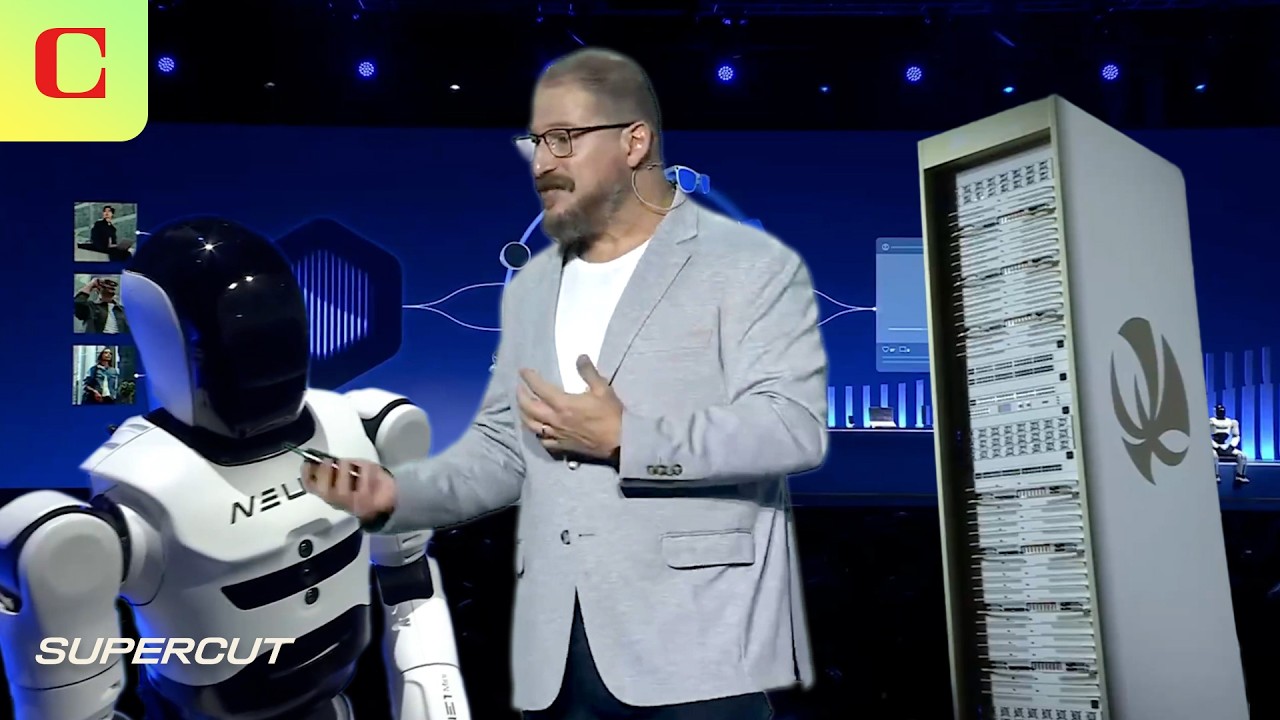
At Computex 2026 in Taipei, Nvidia founder and CEO Jensen Huang delivered a paradigm-shifting keynote that signaled the official transition from generative AI to Agentic AI. For the past few years, the tech world has been captivated by large language models that generate text, images, and code. Today, the game has changed. Useful, autonomous AI agents have arrived—systems capable of observing, reasoning, planning, and executing complex workflows without constant human intervention.
To illustrate this rapid evolution, Huang pointed to the skyrocketing productivity metrics within the software development landscape. GitHub commit data reveals an extraordinary trajectory: 300 million commits in 2023, 400 million in 2024, 500 million in 2025, and a nearly threefold increase in the first few months of 2026 alone. Rather than displacing workers, this explosion in output has led to an unprecedented hiring boom for software engineers.
“People talk about AI reducing jobs. Complete nonsense,” Huang declared. He explained that by leveraging AI agents, the world’s 30 to 40 million software engineers are multiplying their economic output. A $3 trillion investment in developer salaries is now unlocking up to $9 trillion in productivity. This massive economic incentive is fueling a global gold rush for compute infrastructure, fundamentally reshaping the global technology ecosystem.
What Constitutes an AI Agent?
Unlike standard static applications, an agentic system is a highly dynamic, distributed computing model. It consists of three primary layers:
- The Brain: A large language model (or a mixture of specialized models) that handles reasoning, understanding, and planning.
- The Harness: An orchestration layer (like Nvidia’s Open Shell) that manages working memory (such as KV caching), security boundaries, and runtime execution.
- Tools and Skills: External resources—including web browsers, SQL databases, Python sandboxes, and highly optimized libraries—that the agent accesses to perform actual work.
Vera Rubin: The Disaggregated Supercomputer Built for Agents
Because agentic workflows require rapid, continuous loops of reasoning, tool execution, and database queries, traditional computer architectures can quickly become bottlenecks. To address this, Nvidia introduced Vera Rubin, its most ambitious, full-stack infrastructure platform to date. Vera Rubin is not just a single GPU; it is a highly integrated, disaggregated, and distributed pod-scale system built from the ground up to process agentic workloads.
Now in full production, the Vera Rubin platform features a radically simplified design that eliminates the complex cabling, hoses, and fans of previous generations. By utilizing a central PCB midplane to connect all system trays, Nvidia has slashed assembly times for a Grace Blackwell rack from two hours down to just five minutes. This modular, zero-cable design significantly boosts hardware reliability and resilience at AI-factory scale.
Key Components of the Vera Rubin Architecture
- Vera Rubin MVL72: Featuring seven custom TSMC 3nm chips, CoWoS packaging, and ultra-high-speed HBM4 memory, this system acts as the core engine for thinking, reasoning, and context understanding.
- Vera CPU: A ground-up CPU architecture designed specifically to orchestrate agentic loops (detailed below).
- Grock 3 LPX: A specialized Low Latency Processor (LPU) containing 256 processors across 16 trays, delivering an astonishing 40 petabytes per second of SRAM bandwidth for real-time token generation.
- Vera Bluefield 4 STX: An advanced security and storage processing system that handles context memory, insilicon encryption, and rapid data retrieval.
- Spectrum-X Ethernet: The world’s first Ethernet switch featuring 200 GB co-packaged optics, enabling massive scale-out bandwidth across data centers.
Nvidia Vera CPU: Silicon Designed for Non-Human Workloads
One of the most disruptive announcements of the keynote was the debut of the Nvidia Vera CPU. Up until now, central processing units have been architected to serve humans. Humans live in a world measured in seconds; we log in, virtualize resources, and rent cores by the hour. AI agents, however, are highly impatient. They operate in a world of nanoseconds. When an agent accesses a database or runs code in a sandbox, any latency directly degrades token throughput and stalling the entire reasoning loop.
To eliminate this bottleneck, Nvidia designed the Olympus Core, the heart of the Vera CPU. This architecture focuses on single-threaded latency and high instructions-per-clock (IPC) performance, rather than simply cramming more slow cores onto a socket. The Olympus Core boasts a 10-wide decode engine and a state-of-the-art neural branch predictor capable of evaluating two taken branches per cycle.
Breaking Through the Memory Wall
Fast processing cores are useless if they are constantly starved for data. Vera is the first data center CPU to utilize LPDDR5X memory, achieving a 40% reduction in peak memory latency compared to traditional x86 server chips. Furthermore, it incorporates Nvidia’s second-generation scalable coherency fabric, unifying all 88 Olympus cores on a monolithic mesh. This design avoids the performance and latency penalties associated with multi-die chiplet architectures, resulting in 50% faster core-to-core communication.
The real-world performance implications of this design are staggering. Compared to top-tier x86 server CPUs, the Vera CPU delivers:
- 1.8x faster agentic sandbox performance for running isolated Python/JavaScript code.
- 3x faster SQL database queries, radically accelerating structured data retrieval.
- 6x faster real-time stream processing, a breakthrough being utilized by institutions like the New York Stock Exchange to monitor massive, high-throughput financial telemetry.
The Enterprise Agent Toolkit and Neotron 3 Ultra
To democratize agent development, Nvidia announced the Nvidia Agent Toolkit for Enterprise AI. This comprehensive software suite provides companies with the exact models, harnesses, tools, and runtimes needed to build proprietary enterprise agents. Central to this toolkit is Open Shell, an open-source, highly secure runtime sandbox designed to protect data privacy, enforce corporate access privileges, and keep AI agents safely grounded within corporate policies.
Nvidia is also driving the open-weights movement forward with the introduction of Neotron 3 Ultra. Built on a state-of-the-art hybrid architecture that combines State Space Models (SSM) with Mixture of Experts (MoE), Neotron 3 Ultra is highly optimized for fast, long-running reasoning tasks. It operates 5 times faster and is 30% cheaper to run in total compute flops than the market’s leading open models.
Real-World Implementation: Cadence Chip Design Agents
In a striking demonstration of enterprise agent technology, Nvidia showcased its partnership with Cadence. Designing modern microchips with trillions of transistors is incredibly complex, historically requiring weeks of manual RTL verification and debugging. By leveraging the Neotron 3 Ultra model, Cadence’s Chipstack agents can autonomously spin up specialized sub-agents to generate code, create test benches, run simulations, and fix bugs in a closed loop. This system successfully compressed standard chip verification cycles by a staggering 40x, turning weeks of human effort into hours of automated, highly accurate work.
RTX Spark: Re-engineering the PC After 40 Years
Nvidia and Microsoft have partnered to completely reinvent the personal computer. While the PC architecture has remained largely unchanged since the mid-1980s, the age of agentic AI requires a complete rethink of local client silicon. Enter RTX Spark, a brand-new computing platform engineered to run local, personal AI agents 24/7 without “meter anxiety” or reliance on cloud latency.
At the heart of the RTX Spark laptop is the N1X chip, a custom processor developed in partnership with MediaTek. Built on a TSMC 3nm process and packing 70 billion transistors, the N1X fuses a 20-core Grace CPU with a high-performance Blackwell-generation RTX GPU (featuring 6,144 CUDA cores and 1 petaflop of AI performance) across 128 GB of unified memory. Because this platform is 100% compatible with the standard CUDA software stack, users can run advanced genomics, physics simulations, complex 3D graphics, and local LLMs natively on their laptops.
Expanding the RTX Spark Product Family
Nvidia’s hardware partners, including MSI and Asus, are launching three distinct Windows-compatible machine categories:
- RTX Spark Laptops: Sleek, highly efficient client machines optimized for local agent assistance, creative tools, and gaming. Adobe has already re-engineered its creative suite (Photoshop and Premiere) for RTX Spark, delivering a 2x performance increase.
- Local Agent Desktops: Static, constantly-on home servers designed to act as secure personal AI hubs, coordinating smart home devices, scheduling travel, and executing local search pipelines without subscription fees.
- DGX Stations for Windows: Powerful client workstations packing 768 GB of memory and delivering 20 petaflops of performance, allowing local developers to train and run trillion-parameter models directly at their desks.
Physical AI: Cosmos 3 and the Isaac Groot Humanoid Reference Design
The keynote concluded with a deep dive into the world of Physical AI—the integration of AI models into the physical, three-dimensional world. For robots and self-driving cars to navigate our world, they need to learn from a first-person perspective, rather than the third-person perspective found in standard internet videos. Since real-world physical training data is incredibly difficult and expensive to collect, Nvidia is using a new approach: “compute is data.”
To enable this, Nvidia announced Cosmos 3, an open, state-of-the-art physical AI omnimodel. Built on a mixture-of-transformers architecture, Cosmos 3 processes pixels, physical action, sound, and natural language. It functions as a world model that generates highly accurate, physics-compliant synthetic training video, allowing developers to safely simulate millions of training scenarios within the virtual environment of Nvidia Omniverse.
Autonomous Vehicles and Humanoid Robots
Nvidia is applying this physical AI framework to two massive markets:
- Alpamo 2: An open, reasoning-based model designed specifically for autonomous vehicles. Running on the Nvidia Hyperion platform, Alpamo 2 acts as a self-thinking driver, continuously articulating its driving reasoning (e.g., “nudging left due to a stopped vehicle ahead,” “yielding to a pedestrian”) as it navigates complex, dynamic traffic.
- Isaac Groot: An open, fully integrated reference development platform for humanoid robots. It features a physical robot with 31 degrees of freedom (including 25 degrees of freedom on each hand), powered by the Jetson Thor computer. It provides researchers with the modular simulation, data generation, and training libraries needed to bring humanoid robotics to factory floors and research labs immediately.
Conclusion: A Multi-Trillion Dollar Paradigm Shift
From the massive data center clusters of the Vera Rubin platform to the local client engines of RTX Spark, Nvidia’s Computex 2026 Keynote showcased a unified, highly coordinated vision for the future of computing. By shifting focus from simple content generation to active, tool-using, reasoning agents, Nvidia is systematically rebuilding the modern digital economy. With all major supply chain partners, cloud providers, and PC manufacturers fully committed to this new architectural era, the age of Agentic AI is officially here.