

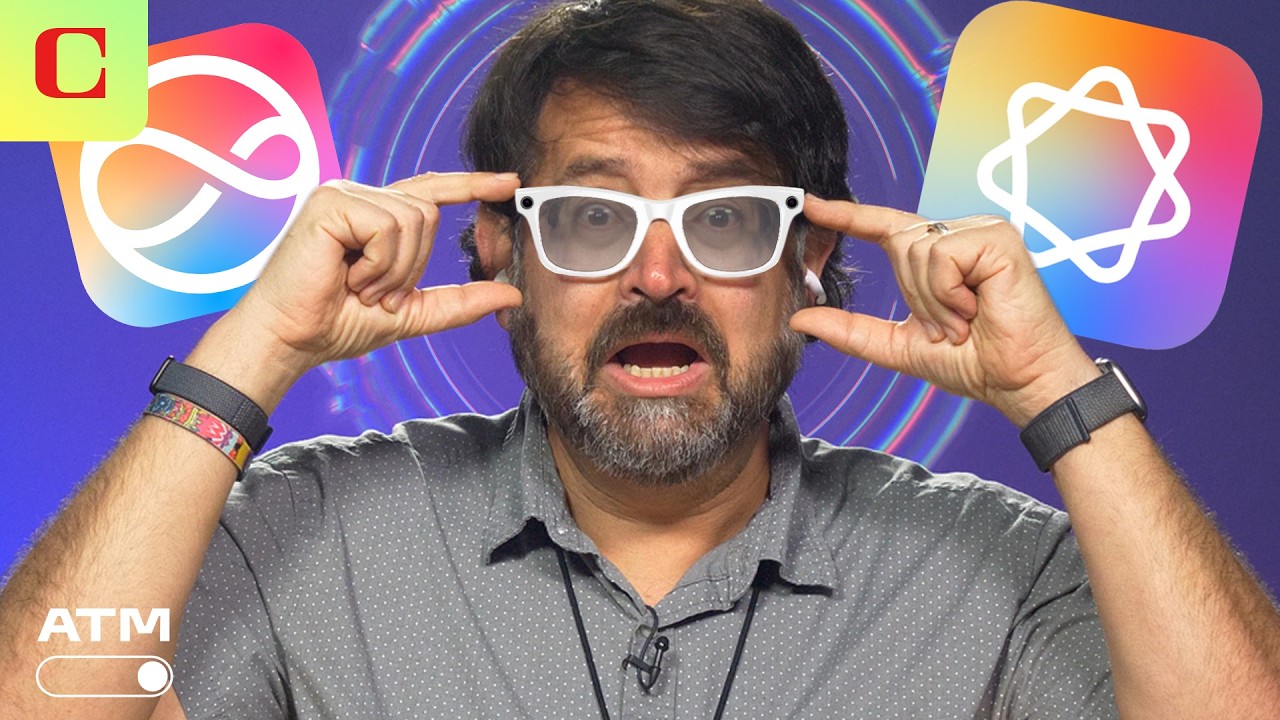
The Wearable AI Revolution is Coming to Cupertino
Wearables on our wrists, in our ears, on our faces, and even on our chests—the landscape of personal technology is shifting rapidly. With Apple’s Worldwide Developers Conference (WWDC) on the horizon, the tech world is buzzing with anticipation. Apple is gearing up for a major push into Artificial Intelligence, and the big question is: how will Apple integrate its nascent ‘Apple Intelligence’ into its highly successful wearables lineup?
While competitors like Meta, Google, and independent startups have rushed to release AI pins, pendants, and smart glasses, Apple has taken its trademark calculated approach. However, behind closed doors, Cupertino is working on a sweeping vision for AI-integrated hardware that could redefine how we interact with the world around us.
The Rumored Trio: Three New AI Wearables on the Horizon
According to prominent Apple reporter Mark Gurman, Apple is actively exploring at least three distinct AI-centric wearable form factors. Some of these represent entirely new product categories for the company, while others are radical re-imaginings of existing accessories.
1. The AI Pendant: Contextual awareness without the ‘Creep Factor’
First-generation AI hardware like the Humane AI Pin and Rabbit R1 attempted to replace the smartphone with wearable AI assistants, to mixed reviews. There is also the rising trend of AI pendants, which hang around the neck and record ambient audio and video to act as a contextual second brain.
For Apple to enter this space, they must overcome a massive hurdle: privacy and social acceptance. How does Apple make a camera-and-microphone-equipped wearable feel socially acceptable? The key lies in contextual, on-device AI. By processing data locally and ensuring tight security, Apple could turn a niche, somewhat invasive concept into an indispensable everyday tool that seamlessly integrates with iOS.
2. Smart Glasses: Augmented Reality meets Voice and Vision
Smart glasses are currently experiencing a renaissance, driven by the success of the Meta Ray-Bans and upcoming offerings from Google and Snap. Apple is uniquely positioned to dominate this category. They already possess industry-leading audio technology, highly compact camera hardware, and a robust silicon architecture.
The missing piece of the puzzle has been next-generation multimodal AI. By equipping lightweight glasses with cameras that can “see” and analyze the user’s environment in real-time, Apple can deliver contextual assistance directly to your ears—and eventually, overlay it onto your eyes via micro-LED displays.
3. The Wildcard: Camera-Equipped AirPods (“AirPods Ultra”)
Perhaps the most immediate and intriguing rumor points to a brand-new iteration of Apple’s iconic earbuds: AirPods equipped with low-power infrared cameras. Expected as early as this fall, these “AirPods Ultra” (or next-gen AirPods Pro) could use cameras for a variety of innovative use cases:
- Multimodal Environmental Awareness: The cameras can scan your surroundings, feeds that data into an on-device AI model, and whisper helpful information into your ear.
- Advanced Gesture Controls: By tracking your hand movements in front of you, the AirPods could allow you to control playback or interact with other Apple devices without touching anything.
- Lip-Reading and Subvocal Speech: Leveraging Apple’s acquisition of QAI, future AirPods might be able to read your lip movements, allowing you to silently dictate commands to Siri in public spaces.
Upgrading the Classics: Apple Watch and Generative AI Fitness Coaching
While new form factors generate massive hype, Apple’s existing wearables are also due for a major brain transplant. The Apple Watch is the undisputed king of smartwatches, but its fitness and health tracking has remained largely quantitative rather than qualitative.
Contrast this with Google’s recent revamp of the Fitbit platform, which integrates Gemini-driven generative AI to act as a personalized fitness coach. Google’s AI can look at your sleep data, workouts, and heart rate to give you nuanced, conversational advice on how to improve your health. Apple is expected to counter this by introducing deeper AI capabilities into watchOS. By utilizing the rumored partnership with Google Gemini alongside Apple’s own proprietary models, the Apple Watch will soon be able to stitch together disparate health metrics into actionable, narrative-driven coaching insights.
The Strategic Play: Multimodal AI and Ecosystem Integration
Apple’s ultimate strength is not any single device, but how those devices talk to one another. The integration of next-gen AI will serve as the connective tissue across the entire Apple ecosystem.
At WWDC, Apple is expected to detail its hybrid AI approach. While lightweight, privacy-focused tasks will run locally on-device, more complex, multimodal tasks—such as processing video feeds from smart glasses or AirPods—will likely be offloaded to secure private cloud servers or handled via integrated partnerships with LLM providers like Google. This multimodal framework will also pay massive dividends for high-end spatial computing platforms like the Apple Vision Pro, bridging the gap between ultra-portable wearables and immersive MR headsets.
The Dawn of a New Era
We are standing on the precipice of a massive transition for Apple. Not only is the company undergoing a fundamental shift toward an AI-first software strategy, but it is also preparing for a long-term executive transition, with leaders like John Ternis poised to carry Tim Cook’s hardware legacy into the next decade.
WWDC will lay the software foundation. Once the developers get their hands on these new AI tools, the hardware to support them will follow. The future of wearables isn’t just about tracking steps or playing music; it’s about giving us an intelligent, ambient assistant that sees what we see, hears what we hear, and anticipates our needs before we even ask.