
The Dawn of the Atlas Lions: A Historic Retrospective (1970-1998)
Moroccan football has always been synonymous with flair, tactical discipline, and unforgettable drama. Long before their historic semi-final run in Qatar 2022, the Atlas Lions were busy writing football history. Between 1970 and 1998, Morocco established themselves as the true pioneers of African football on the global stage. This deep-dive article explores every legendary goal from this golden era, tracking the tactical shifts and legendary players who paved the way for future generations.
1970: Breaking Ground in Mexico
Morocco’s World Cup journey began in Mexico 1970, where they became the first African nation to qualify through a competitive group stage. The tournament immediately showcased their potential to disrupt the traditional football hegemony.
- Houmane Jarir vs. West Germany: Just 20 minutes into their debut match, Jarir capitalized on a defensive mistake to shock the footballing world, putting Morocco ahead against a formidable German side.
- Maouhoub Ghazouani vs. Bulgaria: In their final group match, Ghazouani secured a crucial equalizer with a deflected effort, earning Morocco their first-ever World Cup point.
1986: The Masterclass of Guadalajara
Mexico proved once again to be a lucky ground for Morocco in 1986. Under the tactical guidance of José Faria, the Atlas Lions did not just compete—they dominated. Facing a Group of Death featuring England, Poland, and Portugal, Morocco did the unthinkable by topping the group.
The Destruction of Portugal (3-1)
The match against Portugal remains one of the finest hours in African football history. It was a masterclass executed with breathtaking technical precision:
- Abderrazak Khairi’s Double: Khairi opened the scoring with a thunderous strike from distance, wrong-footing the goalkeeper. Minutes later, he doubled the lead with an unbelievable volley swept in from a Abdelmajid Dolmy and Khalifa cross.
- Abdelkrim Merry (Krimau): Assisted by the genius playmaker Mohamed Timoumi, Krimau calmly slotted home the third goal, sealing Portugal’s exit and confirming Morocco’s historic progression to the Round of 16 as the first African nation to do so.
1994: Moments of Brilliance in the USA
Though the 1994 campaign in the United States ended prematurely in the group stage, the Atlas Lions still delivered moments of sheer quality that delighted neutral fans worldwide.
Against Saudi Arabia, Mohammed Chaouch scored a classic equalizer after brilliant setup play on the wing by Ahmed Bahja. Later, in their match against the Netherlands, Hassan Nader finished a clinical team move, latching onto a brilliant cross to guide the ball past the Dutch goalkeeper, exposing the European giants on the counter-attack.
1998: The Symphony in France
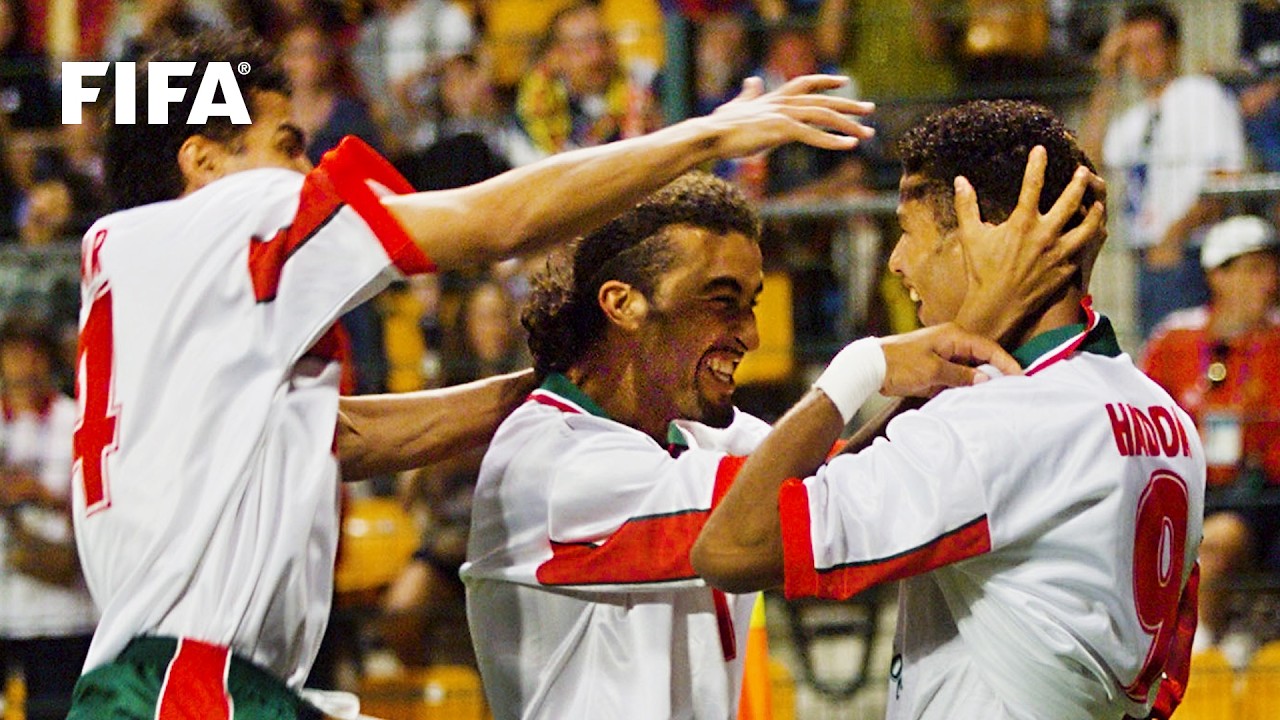
The 1998 World Cup in France featured perhaps the most aesthetically pleasing Moroccan squad ever assembled. Led by superstars like Mustapha Hadji, Abdeljalil Hadda (Kamatcho), and Salaheddine Bassir, the team played with an infectious rhythm and high offensive intensity.
From Hadji’s iconic curling effort against Norway to Bassir’s devastating finishes against Scotland, this era epitomized the perfect blend of individual skill and collective unity. Although cruelly denied qualification to the knockout stages due to late drama in the group, the 1998 squad cemented their legacy as one of the most entertaining teams in tournament history.
Conclusion: A Legacy That Paved the Way
The goals scored between 1970 and 1998 are more than just statistics; they represent the foundation of Moroccan footballing identity. Through technical elegance, tactical bravery, and historic milestones, these early generations proved that African football belonged at the absolute pinnacle of the sport, inspiring the modern heroes of today.