

The Pinnacle of the Beautiful Game: Why Mexico 1970 Changed Football Forever
There is a singular moment in sports history where athleticism, artistry, and technology converged to create something truly magical. That moment was the 1970 FIFA World Cup in Mexico. It was a tournament played under the blazing Mexican sun, defined by the intoxicating rhythm of Samba football, and broadcast to millions of living rooms around the globe. For many, 1970 represents the absolute peak of football—an era of pure joy, unmatched skill, and legendary figures who became immortalized in the annals of sport.

The Color Revolution and the Birth of Global Icons
Before 1970, World Cup broadcasts were primarily black-and-white, grainy affairs. Mexico changed everything. It was the first World Cup broadcast live in glorious color, and no team benefited more from this technological leap than Brazil. Clad in their vibrant yellow shirts and cobalt blue shorts, the Seleção did not just play football; they painted masterpieces on the pitch. The world watched in awe as players like Pelé, Jairzinho, Rivellino, Tostão, and Gerson moved the ball with an almost supernatural understanding.
The tournament became a showcase of individual genius and collective harmony. Brazil’s style, dubbed Joga Bonito (The Beautiful Game), stood in stark contrast to the highly defensive, physical tactics that had begun to dominate European football. It was a celebration of attacking intent and creative freedom that captured the imaginations of fans worldwide.
Pelé’s Masterclass in Audacity and Genius
At the heart of this footballing revolution was Edson Arantes do Nascimento, known to the world as Pelé. Having suffered injuries in the previous two World Cups, the 1970 tournament was Pelé’s redemption arc. He played with a sense of freedom and audacious genius that has never been replicated. Even his near-misses became legendary—the famous dummy against Uruguay that left goalkeeper Ladislao Mazurkiewicz stranded, and the spectacular shot from the halfway line against Czechoslovakia.
But when he did find the back of the net, it was sublime. His opening goal in the final against Italy—a powerful, gravity-defying header where he seemed to hang in the air indefinitely—marked Brazil’s 100th goal in World Cup history. It was a fitting tribute to the greatest player of his generation, asserting his dominance on the world’s biggest stage.

The Ultimate Clashes: England vs. Brazil
The 1970 tournament was also a battleground for the world’s top footballing philosophies. One of the most highly anticipated matches in group play was the clash between the reigning champions, England, and the favorites, Brazil. This game produced two of the most iconic moments in football history.
- The Save of the Century: When Pelé met a cross with a downward header that looked destined for the bottom corner, English goalkeeper Gordon Banks executed a seemingly impossible diving save, clawing the ball up and over the crossbar. It remains the gold standard for goalkeeping excellence.
- Bobby Moore’s Perfect Tackle: As Jairzinho surged forward on a dangerous counterattack, England captain Bobby Moore timed a sliding tackle to absolute perfection, cleanly dispossessing the Brazilian winger without conceding a foul. It was a masterclass in defensive composure.
Ultimately, Brazil broke the deadlock with a brilliant team move finished by Jairzinho, securing a 1-0 victory in a match that epitomized mutual respect and elite sportsmanship between two heavyweight nations.
The Road to Glory and the Perfect Goal
As the tournament progressed, the drama only intensified. Nations like West Germany showcased incredible resilience, coming from behind to defeat England and playing out the “Game of the Century” against Italy in the semifinals—a thrilling match that ended 4-3 in extra time. Yet, the final belonged entirely to Brazil.
Facing a defensively stubborn Italian side, Brazil dismantled them 4-1. The crowning achievement of this match, and perhaps of World Cup history, was Carlos Alberto’s legendary goal. It began deep in Brazil’s own half, involving nine players in a sequence of intricate passes, dummy runs, and effortless ball control. Pelé received the ball at the edge of the area and, with unmatched vision, casually rolled a blind pass to his right. Out of nowhere, captain Carlos Alberto rocketed into the frame, blasting the ball into the far corner of the net.

The Legacy of 1970
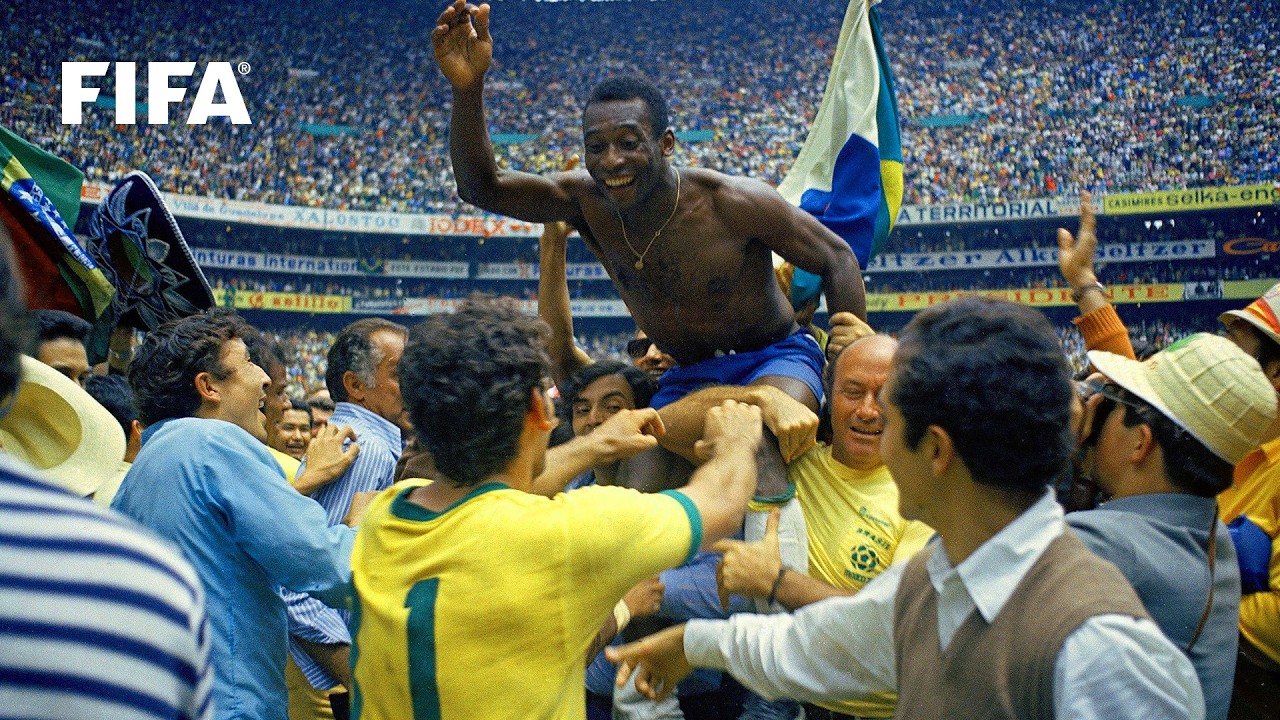
When the final whistle blew, fans swarmed the pitch, hoisting Pelé onto their shoulders. He had won his third World Cup, a record that still stands today. Brazil was allowed to keep the Jules Rimet Trophy permanently in honor of their third title triumph.
The 1970 World Cup was more than just a sporting event; it was a cultural milestone. It showed us what football could be when played with joy, respect, and artistic flair. Decades later, the yellow shirts of the 1970 Brazilian squad still represent the romantic ideal of the sport—a reminder of an era when football was, above all else, beautiful.


