

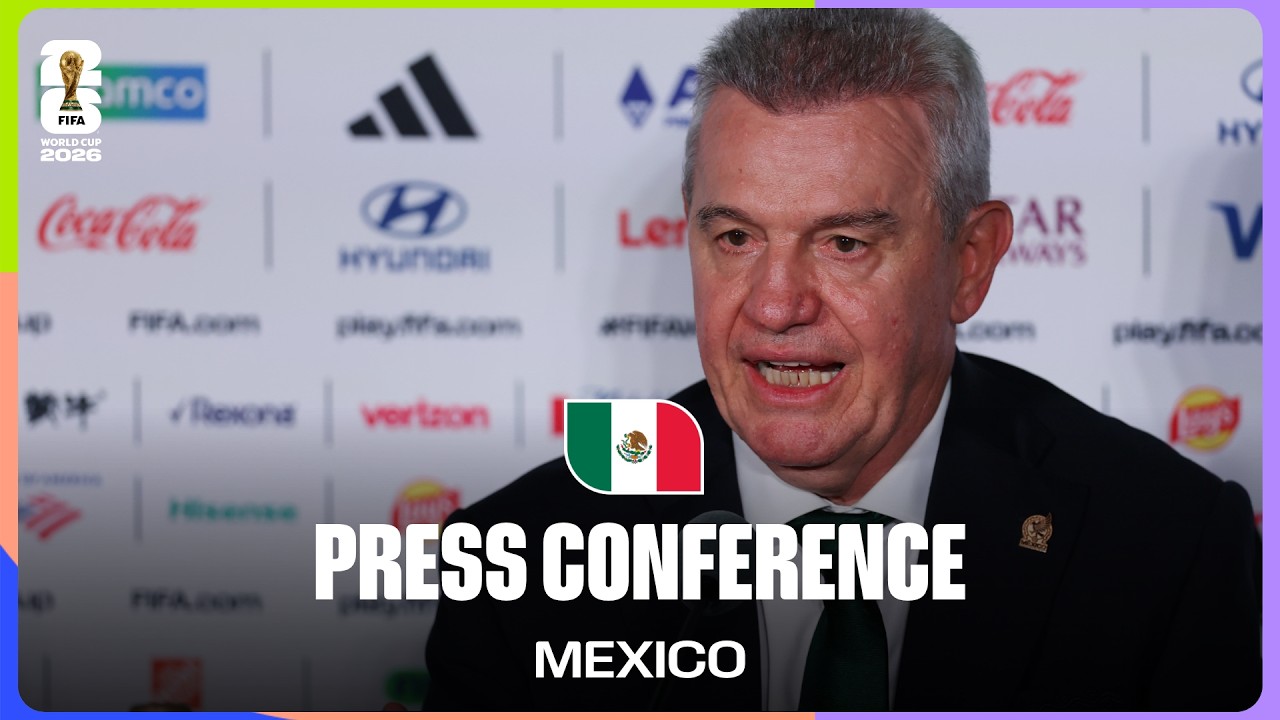
Tactical Maturity, Personal Evolution, and the “Plan B”: Inside Javier Aguirre’s Post-Match Press Conference
Following a tightly contested 1-0 victory over a resilient South Korea side, Mexico’s head coach Javier Aguirre delivered a fascinating, highly candid post-match press conference. The win secured El Tri the top spot in their group, guaranteeing they will play their next two crucial knockout fixtures on home soil at the iconic Estadio Azteca. But beyond the simple joy of qualifying, Aguirre’s remarks provided a masterclass in modern player management, tactical adjustment, and personal leadership evolution.

Patience Over Anxiety: The Tactical Leap from South Africa
One of the primary talking points of the press conference was Mexico’s improved defensive structure. For the first time in recent history, the team kept back-to-back clean sheets—a feat Aguirre attributed directly to “maturity.” Contrast this performance with their chaotic game against South Africa, where Aguirre admitted the squad was consumed by anxiety, leaving huge defensive gaps that a more clinical opponent would have easily punished.
Against South Korea, Mexico remained compact and patient, refusing to break their shape even when starved of possession. Aguirre analyzed the match as a highly tactical chess game where both sides effectively nullified each other. “We learned from our mistakes,” Aguirre explained. “We watched the footage, corrected our medium-block pressing, and chose our moments to jump. When you keep a clean sheet and have clinical moments upfront, you win tournaments.”
Nurturing the Next Generation: Gutiérrez and Obed Vargas
Aguirre didn’t hold back his praise—or his constructive feedback—when discussing his younger players. He shed light on the development of Brian Gutiérrez, who recently turned 23. Born and raised in Chicago, Gutiérrez has faced a steep learning curve after transitioning from Major League Soccer to Liga MX powerhouse Chivas. Aguirre revealed his halftime speech to the youngster was filled with “warmth and calm,” urging him to play his natural game without feeling the need to constantly prove himself. Although Gutiérrez ran out of gas late in the game, Aguirre’s careful handling of his emotions speaks volumes about his coaching philosophy.

The manager also lauded Obed Vargas, whose career trajectory has been nothing short of remarkable. Rising from Alaska through Seattle’s youth academies, Vargas’s recent move to Diego Simeone’s Atlético de Madrid surprised many, including Aguirre himself. “I knew he was going to Europe, but to a massive club like Atlético? It’s fantastic. Under El Cholo, he will learn and correct so many aspects of his game,” Aguirre noted, confirming his trust in the squad’s depth.
The Evolution of ‘El Vasco’: Cell Phones, Grandchildren, and Inner Peace
Perhaps the most endearing segment of the press conference was Aguirre’s reflection on his own personal evolution. Now 67 years old, with two grandchildren, the manager affectionately known as “El Vasco” admitted he is a vastly different leader than he was during his previous World Cup campaigns in 2002 and 2010.
- The Cell Phone Battle: “I lost the phone battle,” Aguirre laughed. “I used to fine them constantly for having phones at lunch or in the dressing room. I was sick of them hiding their screens. Now, I let them. I don’t waste energy on trivial matters anymore.”
- Focusing on the Essentials: Rather than micromanaging schedules and minor rules, Aguirre now focuses his emotional energy on tactical preparation and keeping his players mentally loose.
- A Calm Bench: Former players have joked with him that current squad members wouldn’t survive the intense, strict version of Aguirre from 2010.

Looking Ahead: The Czech Republic and the Power of the Azteca
While celebrating the top-spot finish is historic—marking the first time Mexico has topped their group since Aguirre’s own 2002 side—the veteran coach was quick to turn the page. Up next is a daunting physical challenge against the Czech Republic (Chequia), a team known for their disciplined 5-4-1 system and dominant aerial presence.
“They are incredibly tough, and their physical output is immense,” Aguirre warned. “We need to improve our vertical progression. At times against Korea, we resorted to long balls because they suffocated our exit. Against the Czechs, we must be cleaner in possession.” However, having the roaring crowd of the Estadio Azteca behind them gives Mexico a massive psychological advantage. For Aguirre, playing in front of the home crowd is “priceless,” and he hopes to leverage that energy to push El Tri into the top 10 rankings globally.
As the press conference wrapped up with lighthearted banter about dodging the press with his secret “Plan B” to enjoy a post-victory glass of wine, one thing was abundantly clear: Mexico is in the hands of a matured, strategically sharp, and deeply respected leader. The road ahead is tough, but El Tri has the discipline to dream big.